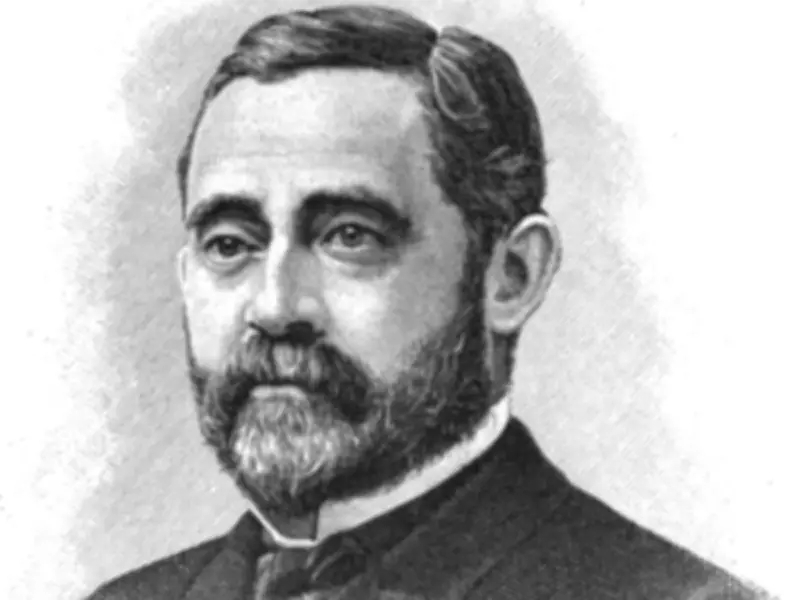
In 1859, a chemist named Robert Chesebrough traveled to Pennsylvania to study the burgeoning petroleum industry. His focus, however, was not on the oil itself but on a sticky, waxy residue that accumulated on drilling equipment and pump rods. According to historical accounts, oil rig workers often scraped off this substance as it interfered with machinery. Yet, the material had gained a local reputation for treating minor skin cuts and irritations. This observation would eventually lead to the creation of Vaseline, a globally recognized skincare product.
A Discovery in the Oil Fields
The narrative of Vaseline's origin is reinforced by historical records and corporate archives. According to California State Parks, Chesebrough became intrigued by petrolatum, a residue from oil drilling in Pennsylvania in 1859. This material served as the foundation for further refining and production of Vaseline. At that time, Titusville was undergoing drastic changes due to the petroleum boom. Oil drilling generated significant residue that workers encountered daily. Most considered it useless, but Chesebrough saw potential.
The official history of Vaseline recounts that in 1859, Chesebrough visited Titusville and became fascinated by an unusual waxy substance with apparent healing properties. He collected samples and began researching its properties in his Brooklyn laboratory.

Turning Residue into a Product
Discovering a chemical compound is one thing; transforming it into a consistent product is another. As detailed in Vaseline's company history, Chesebrough spent several years developing a purification process for the material. He patented his method in 1872 and began marketing the product under the name Vaseline in 1870. This demonstrates how an industrial byproduct can evolve into a marketable invention. Every invention starts with an observation, but not all become useful products. Chesebrough achieved this with his innovation.
The raw material, called "rod wax," was a paraffin-like residue that accumulated on drilling rods. It was regularly scraped off equipment, and Chesebrough recognized its potential commercial value. The image of an opened Vaseline jar (credit: Wikimedia Commons) symbolizes this transformation.
Why It Seemed Useful
While historical accounts suggest workers applied the residue on cuts and burns, modern science explains its effectiveness as a skin protectant. According to a review by the American Academy of Dermatology (via PubMed), petroleum jelly is an outstanding occlusive agent that reduces water loss from the skin and retains moisture. Scientists note that this protective role aids skin healing. Although we cannot verify the workers' experiences, contemporary research clarifies why applying an oily petroleum substance to the skin was considered beneficial.
Clinical studies confirm petroleum jelly's hydrophobic and protective properties, which reduce friction and retain moisture. This scientific backing validates Chesebrough's initial observations.
A Product That Lasted Beyond Its Era
Many 19th-century products have disappeared, but petroleum jelly survived. Its simplicity contributed to its longevity; it required no complex chemicals or shifting medical trends. Instead, it was a straightforward product designed to prevent skin dryness. Its uses expanded beyond skincare. According to studies, petroleum jelly was also employed as a leather dressing. It represented an evolution of pre-existing topical skin protectants rather than a completely new invention. Vaseline's significance lies in improving upon existing items rather than introducing something entirely novel.
An Invention Built on Observation
Over 160 years later, Vaseline's story remains compelling because it began with a simple act of attention. Chesebrough was not aiming to create a global skincare staple; he merely noticed something and decided to harness it for good. Historically, his greatest achievement was not discovering the substance but recognizing its potential and developing a purification method. A byproduct of Pennsylvania's oil fields became a fundamental product used worldwide. This serves as an example of how a simple observation, combined with years of experimentation and refinement, can lead to a lasting invention.

About the Author
The TOI Science Desk is an inquisitive team of journalists dedicated to exploring the realms of discovery. They curate a captivating collection of news, features, and articles from the evolving world of science for readers of The Times of India. Consider them your scientific companion, delivering daily wonder and enlightenment—from genetic engineering to space exploration and artificial intelligence. The TOI Science Desk is committed to demystifying science, making it accessible and engaging for all backgrounds. Join them as they craft knowledge with precision and passion, taking you on a journey where the mysteries of the universe unfold with every word.