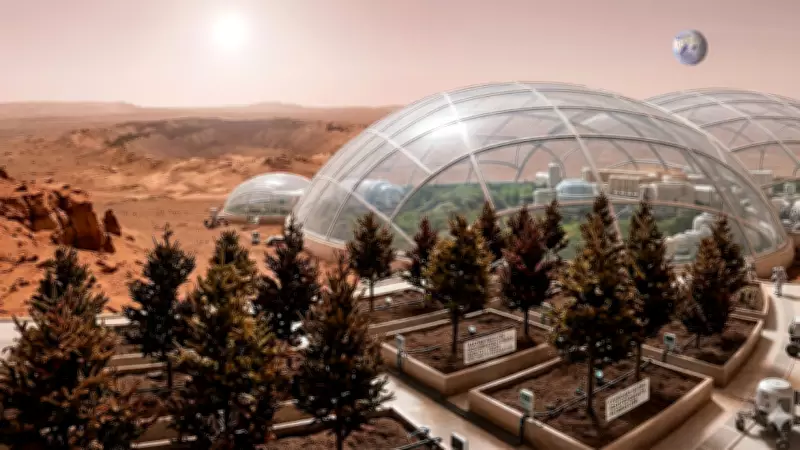
Scientists have identified specific fungi that could play a crucial role in transforming Martian soil into fertile ground for plant growth during future space missions. Research published in Frontiers in Astronomy and Space Sciences highlights how certain fungi can enhance nutrient levels, solubilize minerals, reduce toxic substances, and support plant development in the barren regolith of Mars.
Why Martian Regolith Is Unsuitable for Farming
Gardening on Mars has long posed a challenge for space missions. Unlike Earth's fertile soil, Martian regolith lacks organic content essential for plant growth. It is a dry, mineral-rich layer deficient in key nutrients such as nitrogen, phosphorus, and potassium. Researchers from Iowa State University's Department of Geological and Atmospheric Sciences have also found that Martian soil contains toxic perchlorates, which hinder plant development. The study notes, "Physicochemical constraints of soils on both the Moon and Mars include alkalinity, toxicity of chemical elements, and poor availability of essential elements," making conventional gardening nearly impossible.
How Beneficial Fungi Could Help Crops Grow on Mars
This new research focuses on fungi known to promote plant growth under harsh conditions on Earth. These fungi can break down minerals, release nutrients, and improve soil composition biologically. Through a process of selection, researchers identified Trichoderma, Penicillium, and arbuscular mycorrhizal fungi (AMF) as promising candidates. These fungi act as extensions of plant root systems, aiding in nutrient and water uptake while protecting against environmental stresses. According to the study, "Inclusion of plant growth-promoting fungi in agricultural systems using lunar or Martian regolith as a basis would be an important addition to space crops cultivation." Fungi could eventually transform sterile regolith into biologically active substrates suitable for growing crops. Microorganisms may also neutralize toxic substances and increase soil moisture on the red planet. NASA-backed studies have explored how microbes can engineer healthier simulants of Martian soil, producing organic matter with organic carbon and inorganic nutrients for agriculture.

Fungi and Sustainable Food Production for Mars Missions
Long-duration Mars missions will require astronauts to generate their own food rather than relying on supplies from Earth, which are costly and logistically challenging. Researchers are exploring in-situ resource utilization (ISRU), where available Martian resources sustain human presence. Fungi-based farming could be critical to this effort. Some research suggests that mushrooms may not only help grow crops but also create materials for constructing habitats on Mars. Fungi could produce bio-minerals, enabling the creation of building materials from Martian regolith. While farming on Mars has not yet been attempted, scientists believe fungi will play a key role in future colonization.