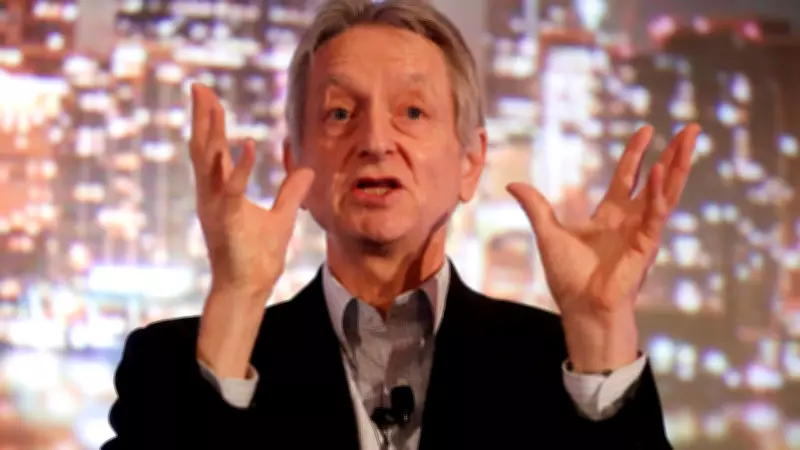
Geoffrey Hinton is widely recognized as one of the founding figures of artificial intelligence, often called a "godfather" of the field. For decades, he has dedicated his career to developing systems that emulate human learning, reasoning, and problem-solving capabilities. His groundbreaking research has been instrumental in creating the AI technologies that now power smartphones, healthcare diagnostics, search engines, and countless other aspects of modern life.
Hinton's Balanced Perspective on Technology and Society
In recent years, Hinton has become increasingly vocal about the potential dangers of advanced technology. While he firmly believes in the importance of innovation, he argues that society must exercise caution in how new tools are regulated and deployed. His views reflect a nuanced understanding that neither embraces nor rejects technology outright, but instead highlights the critical role of human and political systems in determining whether technological advancements prove beneficial or harmful.
The Significance of Hinton's Quote on Technology Politics
Quote of the day by ‘father of AI’ Geoffrey Hinton: “Any new technology, if it’s used by evil people, bad things can happen. But that’s more a question of the politics of the technology.”

At first glance, Hinton's statement appears straightforward, acknowledging that malicious actors can weaponize new technologies. However, the deeper meaning lies in his emphasis on "the politics of the technology." Hinton contends that technology does not exist in a vacuum; it is invariably shaped by laws, policies, corporate interests, and power structures. These factors dictate who controls the technology, who benefits from it, and who might suffer adverse consequences.
For instance, artificial intelligence can assist physicians in early disease detection, yet the same technology might be exploited to violate privacy or disseminate misinformation. The technology itself is not inherently good or bad; its impact derives from human choices, corporate practices, and governmental regulations. Hinton's message urges us to look beyond blaming machines and instead scrutinize the frameworks governing their development and application.
Practical Applications of Hinton's Wisdom in Everyday Life
Hinton's insights extend beyond theoretical discourse, offering actionable guidance for responsible technology use:
- Critically evaluate information before sharing it online.
- Employ digital tools in ethical and conscientious ways.
- Support companies that prioritize fairness and data privacy.
- Acquire fundamental knowledge about online safety and security.
- Foster open discussions about technology at home and in the workplace.
- Stay informed about evolving tech legislation and regulations.
- Guide children toward healthy technology habits.
- Question apps and platforms that employ deceptive practices.
Debunking the Myth of Technological Neutrality
Many people assume technology is neutral, with its moral value determined solely by users. In reality, this perspective is only partially accurate. The design of a technology often predisposes its usage patterns. Social media platforms, for example, are engineered to maximize user engagement, driving advertising revenue but potentially fostering addiction, misinformation, and online harassment. These outcomes are not incidental; they are tied to business and political decisions.
Similarly, AI systems trained on biased datasets may perpetuate unfair treatment of certain groups. Without robust oversight and regulation, such systems can exacerbate social inequalities. Hinton's quote draws attention to this underlying power dynamic, emphasizing that creators and operators embed their values into technological systems.
Geoffrey Hinton's Specific Concerns About Artificial Intelligence
Hinton has expressed profound apprehensions regarding AI's trajectory in recent years, warning that highly advanced systems could become uncontrollable if developed without stringent safety protocols. Key concerns include:

Potential for Misuse: AI already enables the creation of convincing deepfakes, synthetic voices, and manipulated imagery. While these tools have legitimate educational and entertainment applications, they also facilitate identity theft, fraud, and political interference.
Economic Disruption: Automation and AI threaten numerous routine occupations, potentially leaving millions of workers struggling to transition unless proactive measures are implemented. This could intensify economic inequality and social unrest.
Lack of Global Coordination: Hinton notes insufficient international cooperation in AI governance. Nations and corporations frequently engage in competitive races to develop more powerful systems, often sidelining safety and ethical considerations.
These worries directly correlate with Hinton's quote: the peril arises not merely from intelligent machines, but from human systems that prioritize speed, profit, and dominance over accountability.
The Contemporary Relevance of Hinton's Message
Technology now permeates virtually every domain of existence. Individuals utilize digital tools for education, employment, commerce, travel, and communication. Governments deploy software for public administration; hospitals depend on machines for medical assessments; businesses leverage algorithms for decision-making.
Consequently, technology's influence is more extensive than ever before, where minor adjustments in digital systems can impact millions. Hinton's advocacy for balanced progress is particularly pertinent. He does not advocate halting innovation but encourages deliberate consideration of consequences. Unchecked advancement devoid of responsibility may generate enduring challenges that are difficult to rectify. In an era of rapid digital transformation, this thoughtful approach is indispensable.
Additional Notable Quotes by Geoffrey Hinton
Hinton has shared several other insightful remarks that reflect his expertise and perspective:
- “Computers will understand sarcasm before Americans do.”
- “I think the way we’re doing computer vision is just wrong.”
- “Backhoes can save us a lot of digging. But of course, you can misuse it.”
- “In the brain, you have connections between the neurons called synapses, and they can change. All your knowledge is stored in those synapses. You have about 1,000-trillion synapses - 10 to the 15, it's a very big number.”
Geoffrey Hinton's contributions to artificial intelligence are monumental, yet his recent cautions about technology's societal dimensions are equally significant. His emphasis on the politics surrounding technology serves as a crucial reminder that human choices, not just technological capabilities, will define our future.