Google AI CEO Demis Hassabis Cautions Against Overstating AI's Math Olympiad Achievements
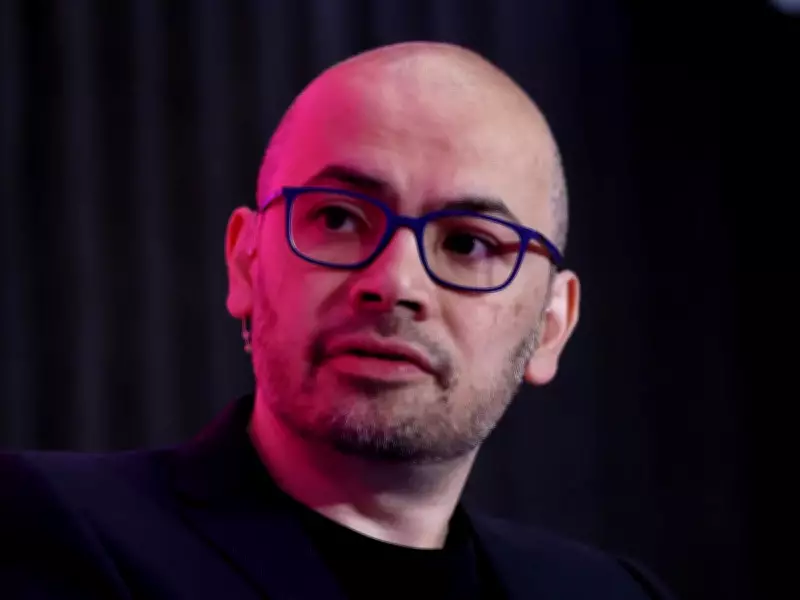
At the India AI Impact Summit 2026, Google AI CEO Demis Hassabis issued a significant warning about the current state of artificial intelligence. He emphasized that while AI systems like Gemini and ChatGPT can solve complex problems from the International Maths Olympiad, these feats should not be misinterpreted as evidence of general intelligence.
Jagged Performance Highlights AI's Limitations
Hassabis pointed out a critical flaw in today's AI models. "Today's systems can get gold medals in the International Maths Olympiad, really hard problems, but sometimes can still make mistakes on elementary maths if you pose the question in a certain way," he stated. This inconsistency, which he described as "jaggedness," reveals that these systems lack the robust and adaptable reasoning of true general intelligence. A genuinely intelligent system, according to Hassabis, would not exhibit such variable performance across different types of mathematical queries.
Key Gaps Preventing General Intelligence
Hassabis outlined several fundamental shortcomings in contemporary AI that prevent it from achieving general intelligence. He highlighted three primary areas of deficiency:

- Continual Learning: Current AI models are "frozen" after their initial training phase. They cannot adapt or learn from new experiences once deployed, unlike humans who continuously acquire knowledge.
- Long-Term Planning: While AI excels at short-term tasks, it struggles to formulate and execute coherent strategies that span years, a capability essential for complex real-world applications.
- Consistency Across Domains: AI systems often perform exceptionally in specific areas but fail in others, even within the same field like mathematics. This lack of uniform competence undermines claims of broad intelligence.
For Hassabis, the next frontier in AI development involves building systems that can learn continuously, plan over extended periods, and maintain consistency across diverse tasks. Without these advancements, achievements like solving Olympiad problems remain narrow technical victories rather than proof of true, human-like intelligence.
Hassabis Predicts AI's Transformative Role in Healthcare
Beyond critiquing current limitations, Hassabis also shared an optimistic vision for AI's future impact. He recently stated on social media platform X that "one of the most important things we can use AI for is to improve human health." He elaborated that AI is already accelerating drug discovery and could revolutionize pharmaceutical development.
Through Isomorphic Labs, a biotech startup he co-founded in 2021, Hassabis aims to create a system capable of producing dozens of drugs annually. "A biotech startup might do one or two drugs its entire corporate life," he told Fortune. "But we're trying to build a system, a process, and all the technology to do maybe dozens of drugs each year. That seems crazy right now, but I think eventually, over the next 10 to 20 years, we could get to finding a solution to all disease...if we have a process that can find these needles in a haystack."
His comments come amid broader debates about AI's societal effects, including job displacement and automation. By focusing on healthcare, Hassabis positions AI as a tool for delivering long-term, life-saving benefits to humanity, countering fears with a constructive application.
The insights from the India AI Impact Summit 2026 underscore a pivotal moment in AI discourse. While celebrating technical milestones, leaders like Hassabis urge caution, emphasizing that the path to general intelligence requires overcoming substantial hurdles in learning, planning, and consistency.