

A recent and seemingly simple question posed to Google's search engine has exposed a surprising flaw in its new AI-powered results feature. When asked "is it 2027 next year" in the year 2026, Google's AI Overviews provided an incorrect and confusing answer, prompting commentary from tech billionaire Elon Musk.
The AI Overviews Blunder
The incident was highlighted by a user on the social media platform X, formerly known as Twitter. According to the post, when the query was entered, the AI Overviews feature – which provides AI-generated summaries at the top of search results – replied with a definitive "No, 2027 is not next year." It then elaborated, stating, "2026 is the next year, and 2027 will be the year after that, a common year starting on Friday, according to the Gregorian calendar." The response cited Wikipedia and Time and Date as its sources.
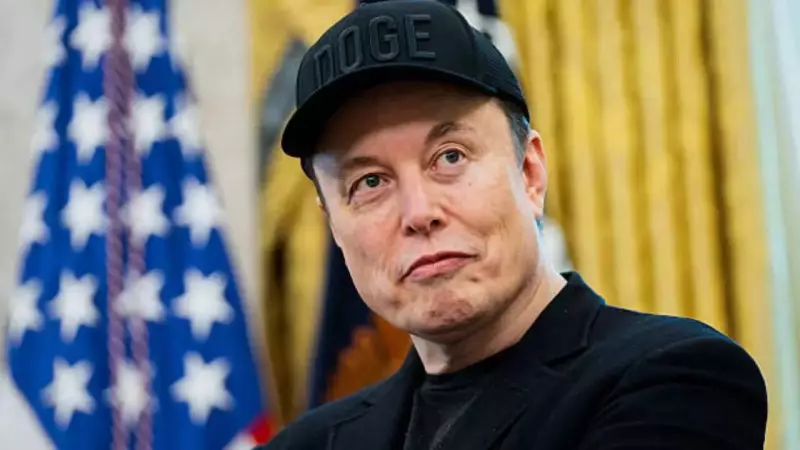
The user, X Freeze, captioned the post, "2026 is not working great for Google." The error quickly drew attention, including from Tesla and SpaceX CEO Elon Musk, who responded with a succinct, three-word assessment of the situation: "Room for improvement."

What Are Google AI Overviews?
Introduced in 2024, AI Overviews is a significant evolution of Google Search. The feature leverages artificial intelligence, specifically a customized version of the Gemini Pro 1.5 model, to generate concise summaries in response to user queries. The goal is to save users time by providing quick, informative answers without needing to click through multiple links.
"So you can ask whatever’s on your mind or whatever you need to get done — from researching to planning to brainstorming — and Google will take care of the legwork," explained Liz Reid, VP and Head of Google Search, at the feature's announcement. She highlighted that the system combines Gemini's advanced capabilities like multi-step reasoning and planning with Google's core search technology.
The feature is designed to handle complex, multi-part questions. For example, instead of performing several separate searches, a user could ask: "Find the best mobile phone accessory shop in Noida sector 18 and show me details on any store offers, and walking time from Mall of India." Similarly, it can help with tasks like creating a one-month exercise plan or drafting a week-long travel itinerary for destinations like Ladakh.
Context: Musk's Recent Praise for Google's YouTube
Elon Musk's comment on the Google AI error comes shortly after he made headlines for a different reason involving another Google-owned platform. In a discussion on X about his own platform's creator monetization system, Musk acknowledged that X was "underpaying" content creators and not allocating payments accurately enough.
This admission came in response to a thread started by an X executive about platform upgrades. When another user complained about consistently being underpaid compared to peers, the executive suggested the payout program might do "more harm than good." Musk intervened, disagreeing with that conclusion and pinpointing the execution as the core issue.
The juxtaposition is notable: while Musk is openly critical of a flaw in Google's flagship AI search product, he has recently implicitly acknowledged the superior monetization mechanics of Google's video platform, YouTube, in contrast to the system on his own social network, X.
This event underscores the growing pains associated with integrating generative AI directly into search results. While designed for complex tasks, the Google AI Overviews feature's stumble on a basic question of temporal sequence highlights the ongoing challenges in ensuring accuracy and logical consistency, even as the technology aims to revolutionize how we find information online.






