Google has a message for smartphone users: The era of proactive Android is here, and Gemini is at the centre of it. Google has launched Gemini Intelligence, a massive upgrade to the Android ecosystem that shifts the smartphone from a reactive tool to a proactive assistant. The company is blending 'Agentic' AI into everyday tasks, allowing users to stay focused on what matters most. The rollout begins this summer for the Samsung Galaxy S26 and Google Pixel 10 devices, with plans to expand to watches, cars, smart glasses and laptops later this year. Here are the key things that Google is bringing to Android:
Automating multi-step tasks
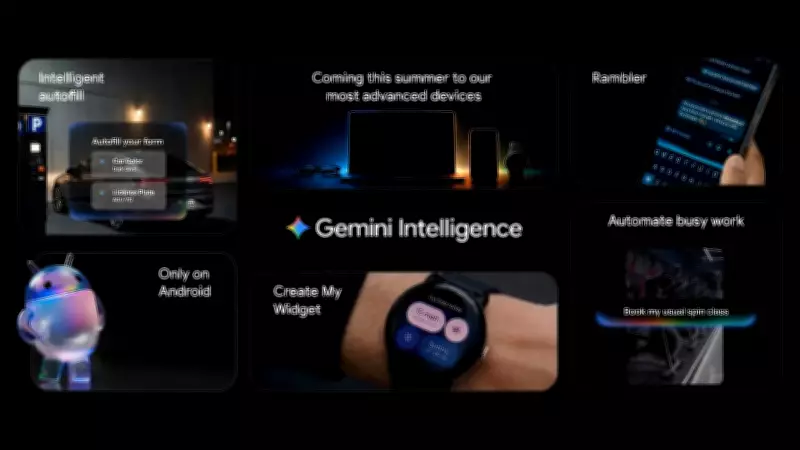
According to Google, Gemini Intelligence has the ability to perform complex, multi-step actions across different apps. Instead of you navigating through menus, Gemini does the legwork. For example, Gemini can find a class syllabus in Gmail, identify the required textbooks and automatically add them to the shopping cart. It can even book a specific bike for your next spin class. This automation becomes even more powerful with visual context. For example, if you have a grocery list open in a notes app, you can long-press the power button and ask Gemini to 'build a shopping cart for delivery' using those items. Users can snap a photo of a travel brochure in a hotel lobby and say, 'Find a tour like this on Expedia for six people.' Gemini works in the background, providing live progress notifications until the task is ready for your final confirmation.
Form filling and ‘Rambler’ speech
Google is also tackling two of the most common mobile frustrations: text forms and disorganised voice typing. Moving beyond basic name and address saved data, Gemini can now pull relevant info from your connected apps to fill out complex forms with a single tap. Google notes that this feature is strictly opt-in, giving users full control over their data privacy. Rambler is a new Gboard feature that is designed for the way people actually speak. Google claims that Rambler can filter out the noise or words like 'um' or 'like' and self-correct mid-sentence, capturing only the important parts to create a polished, concise message. It supports multi-lingual blending, so users can switch between languages like English and Hindi in a single transcription.

Generative UI: Create My Widget
In a first for 'Generative UI,' Google is introducing Create My Widget, allowing users can now build functional, intelligent tools on their home screen simply by describing them. For example, users can ask for a widget that 'Suggests three high-protein recipes every week.' Another example could be creating a custom weather that displays specific data that users want to see. These widgets are fully resizable and work across both phones and Wear OS watches.
Material 3 Expressive and privacy
To complement these smart features, Google is updating its design language to Material 3 Expressive. Google emphasised that users remain in total command. Gemini only acts on specific prompts and stops immediately once a task is finished.