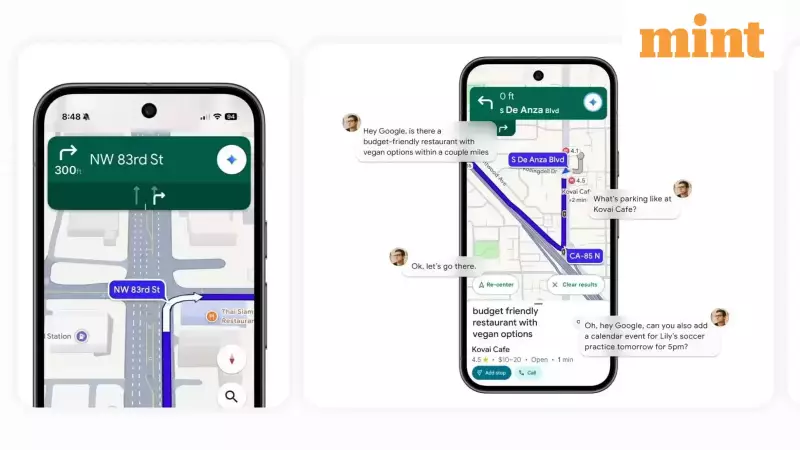
Google Maps is about to become your smartest travel companion yet! The tech giant has announced the integration of its cutting-edge Gemini artificial intelligence directly into the mapping platform, bringing revolutionary navigation capabilities that understand the real world like never before.
Hands-Free Navigation: Your Voice is the New Remote
Imagine planning your entire route without ever touching your phone. With Gemini AI integration, Google Maps will allow users to search for places, get directions, and answer navigation queries using just their voice. This hands-free approach promises to make driving safer and navigation more convenient for millions of Indian commuters.
Landmark-Based Navigation: "Turn Left After the Temple"
One of the most exciting features is the enhanced landmark navigation. Instead of relying solely on street names and distances, Google Maps will now use visual landmarks and real-world references. The AI can recognize prominent buildings, stores, temples, and other points of interest, giving you instructions like "Turn right after the shopping mall" or "Your destination is next to the blue building."

Enhanced Search and Route Planning
The Gemini-powered upgrade will transform how you search for places and plan routes. The AI can understand complex, multi-stop queries and provide optimized routes based on your preferences. Whether you're looking for the quickest way home during rush hour or planning a weekend road trip with multiple stops, the new Google Maps will handle it intelligently.
What This Means for Indian Users
For Indian roads where street names can be confusing and landmarks are often more reliable navigation aids, this update is particularly significant. The combination of hands-free operation and landmark-based guidance could dramatically improve the navigation experience across cities and rural areas alike.
When Can You Experience It?
While Google has confirmed the integration, the features are expected to roll out gradually. Indian users will likely be among the first to experience these AI-powered capabilities, given the country's importance as a key market for Google's mobile services.
The integration represents Google's continued commitment to making navigation more intuitive, accessible, and context-aware. As AI continues to evolve, our digital maps are becoming less about static directions and more about intelligent guidance that understands both the digital and physical worlds around us.