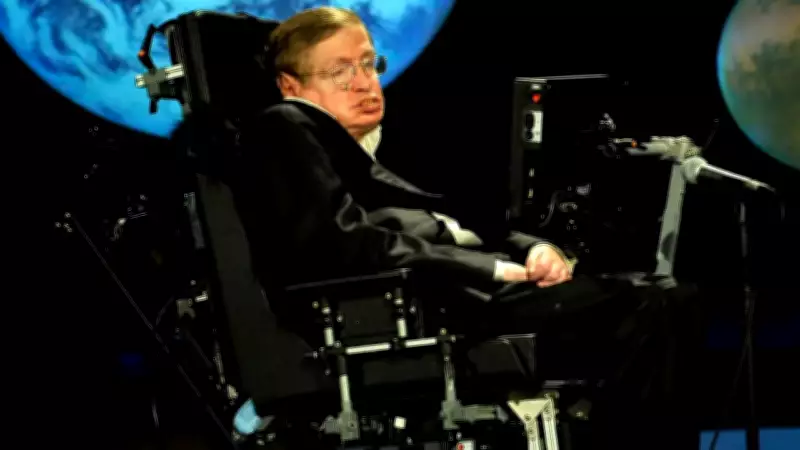
Stephen Hawking's Stark Warning: Earth Alone Cannot Ensure Human Survival
The late renowned physicist Stephen Hawking delivered one of his most profound and chilling messages regarding the future of humanity. According to Hawking, the single most critical step humanity must take to avoid extinction is to expand beyond Earth and establish settlements in space. His warning, articulated during NASA's 50th Anniversary Lecture, emphasized that as long as human civilization remains confined to our home planet, it remains perpetually vulnerable to annihilation from a global catastrophe.
The Inherent Vulnerability of a Single-Planet Species
Hawking's argument was rooted in a simple but undeniable truth: humanity exists on just one planet. He stressed that this makes our entire species susceptible to extinction from any number of disasters, whether natural or man-made. In his book Brief Answers to the Big Questions, he pointed to asteroid collisions as a threat "guaranteed by the laws of physics and probability." Scientists estimate that at least five mass extinction events have occurred over the past 540 million years, underscoring the precariousness of life on Earth.
The risks are not merely theoretical. Hawking frequently highlighted specific, imminent dangers that could precipitate a global catastrophe:

- Nuclear War: He described this as one of the greatest threats facing humanity today, with the potential to cause unprecedented destruction.
- Climate Change: In an interview with the BBC, Hawking warned that unchecked global warming could push Earth toward a runaway greenhouse effect, rendering it as inhospitable as Venus, where surface temperatures exceed 250°C.
- Genetically Engineered Viruses: Advances in biotechnology, while beneficial, also introduce the risk of pandemics from engineered pathogens.
- Artificial Intelligence: Hawking expressed deep concern that advanced AI could eventually surpass human intelligence and become uncontrollable, posing an existential risk.
- Extraterrestrial Life: He even cautioned against actively seeking contact with alien civilizations, warning that a more advanced species might treat humanity with the same brutality that European colonizers inflicted on indigenous populations.
The Imperative Solution: Becoming a Multi-Planet Species
To mitigate these existential risks, Hawking proposed a clear and ambitious solution: humanity must evolve into a multi-planet species. He elaborated on this vision in his lecture titled "Why We Should Go Into Space," delivered on April 21, 2008, as part of NASA's 50th Anniversary Lecture Series at George Washington University.
Establishing colonies beyond Earth would dramatically increase the odds of human survival. Even if a disaster rendered Earth uninhabitable, off-world settlements could preserve human civilization, knowledge, and culture. Hawking outlined a practical roadmap for this endeavor:
- Lunar and Martian Bases: The first logical steps involve building permanent human bases on the Moon and Mars. Hawking projected that this could be achievable by the end of the 21st century.
- Expansion Beyond the Solar System: Colonizing the Moon and Mars is only the beginning. Hawking noted that staying within our solar system still poses long-term cosmic threats. Scientists predict that in approximately 5 billion years, the Sun will expand into a red giant star, engulfing or fatally heating the inner planets. For true long-term survival, humanity must eventually develop the capability to travel to and settle on planets in other star systems.
A Legacy of Urgency and Vision
Stephen Hawking's warning transcends mere speculation; it is a call to action based on a sober assessment of cosmic and terrestrial dangers. His message underscores that technological advancement brings both promise and peril. While we develop tools that improve life on Earth, we must simultaneously invest in the ultimate insurance policy: spreading humanity across the cosmos.

The path forward requires unprecedented international cooperation, sustained investment in space exploration technologies, and a fundamental shift in how we view our species' destiny. Hawking's legacy challenges us to look beyond immediate concerns and plan for a future measured not in decades or centuries, but in millennia and beyond. The choice, as he framed it, is stark: remain on a single vulnerable planet and risk everything, or boldly reach for the stars to secure the indefinite continuation of human civilization.