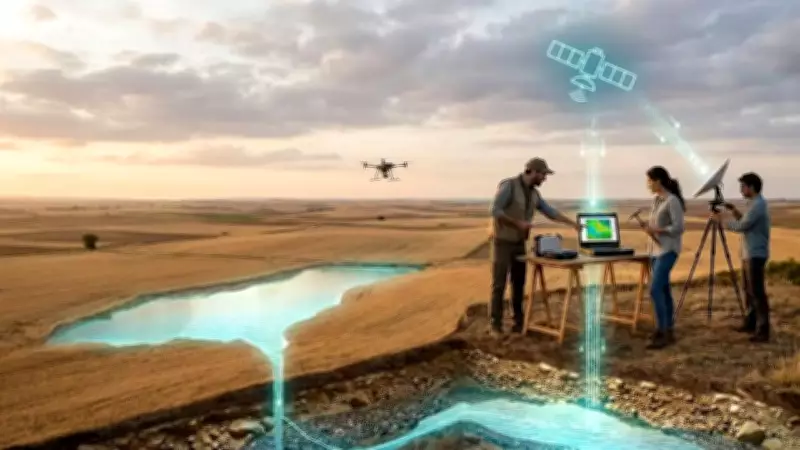
Researchers have utilized advanced satellite technology to uncover a substantial underground aquifer located beneath Spain's primary agricultural region. This discovery arrives at a critical time, as water scarcity and prolonged droughts become increasingly common across the Mediterranean region.
How Satellite Technology Revealed the Hidden Water Source
Scientists employed Synthetic Aperture Radar (SAR) along with gravity-mapping data, enabling them to see through the ground and pinpoint water-filled layers that traditional methods failed to detect. This hidden water source could prove vital for local irrigation and the revival of ecosystems, particularly in the struggling wetlands of Castilla-La Mancha. The finding underscores the growing importance of space-based observation in managing Earth's limited freshwater resources and securing food supplies in dry areas.
InSAR Technology Uncovers Groundwater Changes
According to research published in Research Gate, the main discovery utilizes InSAR, a radar technology that detects minute changes in ground height. This helps scientists understand the health of aquifers. As aquifers lose or gain water, the ground shifts correspondingly. Researchers studied these shifts to determine the volume of water in Spanish reserves, especially in detrital aquifers where excessive use has historically caused the ground to sink. This approach offers a method to monitor groundwater levels and movement across large farming areas without the need for extensive drilling.

How Ancient Floodplain Sediments Preserve Vital Aquifers
Recent studies have uncovered separate water systems, such as the Planas de Raimat-Monreal reserve, which covers approximately 31 square miles. These reserves lie within layers of ancient floodplain sediments and gravel deposits that hold water. In contrast to neighboring systems, these isolated aquifers lack lateral connections. Consequently, tracking their inputs and losses becomes simpler. This is essential for sustainably managing agricultural districts, as these regions depend on these 'buried legacies' of older landscapes.
The Vital Role of GRACE Satellite Records
Scientists use the GRACE satellites to confirm large-scale water bodies. These satellites detect changes in Earth's gravity field resulting from shifts in water mass. In regions like Spain and other dry areas, this information helps distinguish between shallow soil moisture and deep, ancient water reserves. According to NASA, over a decade, GRACE has built a data record that assists water managers in observing long-term trends in the utilization of underground resources.
The Role of Satellite-Based Crop Mapping
The American Society for Horticultural Science believes that Remote Sensing-based Irrigation Water Accounting (RS-IWA), which uses Sentinel-2 and Landsat data for enhanced accuracy—such as multispectral reflectance and vegetation indices—is key to promoting sustainable farming. In Spain, scientists are developing methods to map irrigated crops and determine their water requirements from space. This enables them to closely monitor aquifer depletion. Their goal is to keep water withdrawal within safe limits to prevent permanent land subsidence in areas with high water demand.