Snakes have always been fascinating slithering creatures for human beings. Living in the wild and swampy areas, these reptiles have a fearsome reputation for their venomous nature and constantly oscillating forked tongues. With some species like the cobra especially prevalent in India, snakes also have a unique place in Hindu mythology, with festivals like Naga Panchami that revere the creature.
Among the many species of snakes, cobras are among the most dangerous due to their potent venom. Identifying them in the wild is a skill that requires observation and caution. While many people identify cobras mainly by their famous hood, several details in their physical structure and behavior can help differentiate them from other snakes. By understanding their specific characteristics and defensive posturing, people can gain a better appreciation for these animals while maintaining necessary safety. Here are some necessary traits, behavior patterns, and breeding behaviors that will help identify them safely from a distance.
Indian Cobra: The Iconic Hood Display
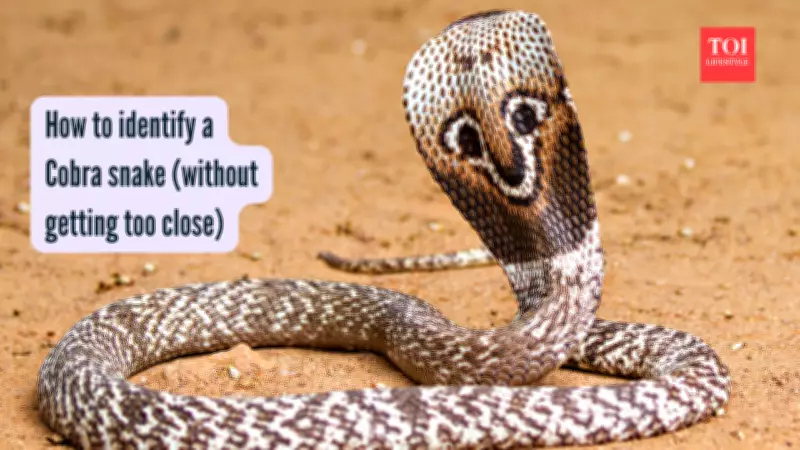
The most commonly recognizable feature of any cobra is its ability to flare its neck ribs to form a wide, flattened hood. According to the Environmental Literacy Council, "Cobras, when threatened, can flare out their neck ribs to form a distinctive, flattened hood." This behavior is a form of defense and a response meant to intimidate predators or rivals by making the snake appear bigger. From a distance, this distinct shape of the body, even as a shadow, is a primary indicator, although one should always maintain a safe distance and never approach the animal to confirm.

Eye-like Markings on the Back of the Body
Many cobra species have unique patterns on the back of their hoods, which act as excellent identification marks. The Indian cobra, in particular, is often called the "spectacled cobra" because of its marking. When these individuals raise their hoods in defense, the singular or paired eye-like prints on the back of its hood become visible, formed by two circular spots connected by a curved line. These patterns are highly individual, much like a tiger's stripes, and can sometimes be seen even from a few feet away if the hood is fully expanded.
Defensive Body Posture
Beyond the hood, when threatened or ready for combat, cobras place their bodies in a special posture, especially when they feel cornered or threatened. They can rise up and hold a significant portion of their body vertically. If provoked, they have the ability to stand up on two-thirds of their body, elevating the remaining one-third up in the air to show aggression. This upright posture is a classic warning sign that the cobra is in its defensive mode and requires immediate space.
Pupil Shape and Facial Features
When viewed closely, though always done with extreme caution, cobras exhibit specific facial traits common to the Naja genus. Unlike many other snake species that possess vertical slit pupils, cobras have round pupils. Furthermore, they generally have a heavy-bodied appearance with a short and rounded snout, helping them camouflage into their environments while remaining alert to their surroundings.
Understanding these key traits can help individuals identify cobras safely and appreciate their role in the ecosystem. Always remember to keep a safe distance and never attempt to handle or provoke a wild snake.