In a significant step toward bridging India's linguistic divide, the Centre of Indian Language Data (COIL-D) initiative at the Indian Institute of Technology-Patna (IIT-P) is emerging as a key driver of multilingual artificial intelligence (AI) under BHASHINI, a flagship programme of the Union Ministry of Electronics and Information Technology. The mission aims to enable seamless communication across India's diverse linguistic landscape.
While high-quality datasets from Hindi to 17 Indian languages and Tamil to three Dravidian languages form the foundation, COIL-D's vision extends far beyond data creation. The project adopts a holistic AI pipeline approach, focusing on the development of machine translation (MT) systems in Indian languages. By integrating data, models, evaluation, and deployment, COIL-D is building a complete ecosystem for multilingual AI in India.
Details of the Initiative
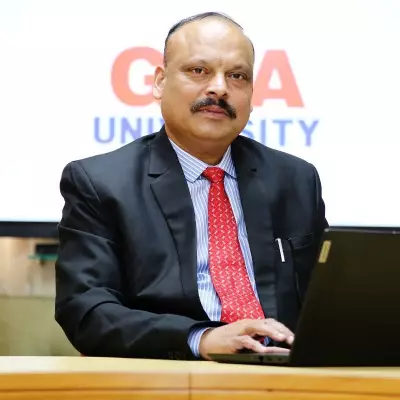
Giving details of this initiative, IIT-P director T N Singh, who is monitoring the progress of the project, said COIL-D represents a transformative step toward linguistic inclusivity in India's digital ecosystem, where technology empowers citizens across language boundaries. The project is led by Asif Ekbal of IIT-P's Department of Computer Science and Engineering and is collaborated by IIT-Delhi, IIT-Guwahati, Indraprastha Institute of Information Technology-Delhi, Indira Gandhi Delhi Technical University for Women, Manipal Institute of Technology, and the Digital India Bhasini Division (DIBD).

Singh pointed out that COIL-D operates through a broad collaborative network involving academia, government agencies, judicial bodies, and startups. Key partners include the India Meteorological Department and the Madras High Court, among others. This multi-stakeholder ecosystem ensures that COIL-D's outputs extend beyond research, delivering scalable and practical solutions aligned with national priorities.
Expected Impact Across Sectors
The initiative is expected to have a wide-ranging impact across sectors. In governance, it will enable citizen services in native languages, while in education, it will support inclusive digital learning. It also aims to enhance communication in healthcare and agriculture, particularly at the grassroots level.
The emerging applications of this initiative include regional-language climate alerts, translation of legal documents, multilingual tourism platforms, and broader access to scientific knowledge. The initiative is also poised to strengthen India's digital economy by equipping startups with multilingual AI tools.
COIL-D demonstrates how data, machine learning systems, benchmarking frameworks, and large-scale collaboration can converge to solve national challenges. "By advancing multilingual AI and ensuring its real-world usability, the project is not only driving technological progress but also expanding access, enabling participation, and shaping a truly inclusive Digital India," Singh said.