India AI Summit: Homegrown Models Redefine Global AI Race with Cultural Depth
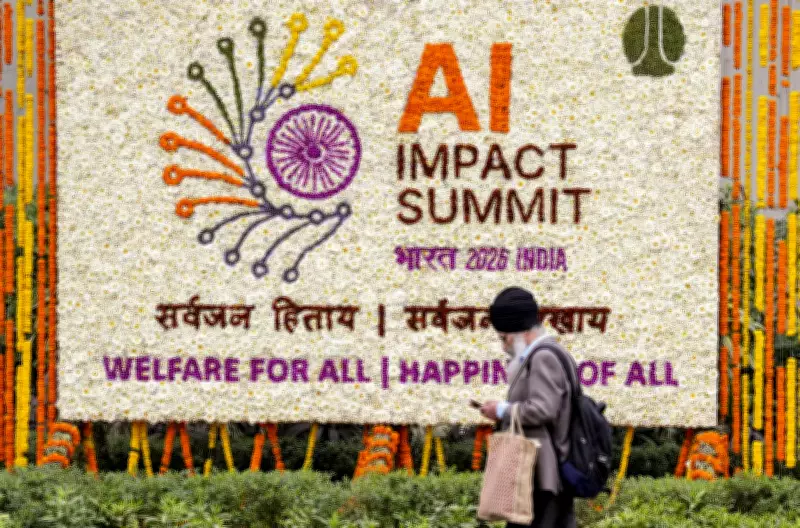
In a landmark development at the India AI Summit held in New Delhi, a trio of domestic artificial intelligence model launches has signalled a profound shift in the nation's technological strategy. Rather than merely attempting to keep pace in the global AI arms race, India is now actively redefining what winning looks like in this high-stakes arena.
Focus on Linguistic and Cultural Depth Over Parameter Counts
Companies such as BharatGen, Sarvam AI, and Gnani.ai are strategically positioning their latest systems as innovative solutions to a critical problem that frontier models from international tech giants have yet to convincingly solve. This problem revolves around achieving deep linguistic and cultural understanding specifically tailored for India's diverse population.
Sarvam AI made a significant impact by unveiling a robust 105-billion-parameter model that is finely tuned for Indic reasoning and translation tasks. The company argues that global AI systems often falter when confronted with code-mixed text or nuanced local references that are commonplace in Indian communication. Sarvam AI claims its model can even outperform global tech leaders in specific areas such as optical character recognition and multilingual speech processing for Indian languages, backing these assertions with benchmark scores.

BharatGen introduced a 17-billion-parameter multilingual Mixture-of-Experts model that has been extensively trained across a wide array of Indian languages. This model is specifically designed to address critical use cases spanning governance, education, healthcare, agriculture, and enterprise solutions, demonstrating a practical approach to AI deployment.
Gnani.ai launched a five-billion-parameter voice-to-voice model engineered to handle the complexities of everyday Indian speech. This includes managing heavy accents, background noise, and the common Hindi-English blends that characterize much of the nation's verbal interactions. The company emphasizes that it delivers this high level of performance with greater efficiency compared to larger global models.
Contrast with Global AI Systems
In stark contrast, leading AI systems from international powerhouses such as OpenAI and Google continue to dominate global benchmarks and boast higher parameter counts. However, these models are primarily trained on globally aggregated datasets where languages like English and Mandarin significantly outweigh most low-resource languages, including many Indian dialects.
Indian developers argue that this results in AI systems with strong general reasoning capabilities but uneven contextual fluency when applied on the ground in India. The nuanced understanding required for local contexts often falls short in these globally-focused models.
India's Strategic Bet on Data Relevance
India's strategic bet in the AI domain is clear: data relevance may ultimately trump raw scale in a market comprising 1.4 billion people. By prioritizing linguistic and cultural depth over mere parameter counts, these homegrown models aim to provide more accurate, context-aware, and efficient AI solutions tailored to the unique needs of Indian users.
This approach not only challenges the conventional metrics of AI success but also positions India as a formidable player in shaping the future of artificial intelligence, with a focus on inclusivity and practical applicability.