India Hosts AI Impact Summit 2026, PM Modi Welcomes Global Leaders
New Delhi has become the focal point of global artificial intelligence diplomacy as the India AI Impact Summit 2026 kicks off at Bharat Mandapam. This landmark event, the first major AI summit held in the Global South, brings together political leaders, technology executives, startups, and researchers from over 45 countries to deliberate on an inclusive and responsible AI future.
PM Modi Emphasizes Human-Centric AI Progress
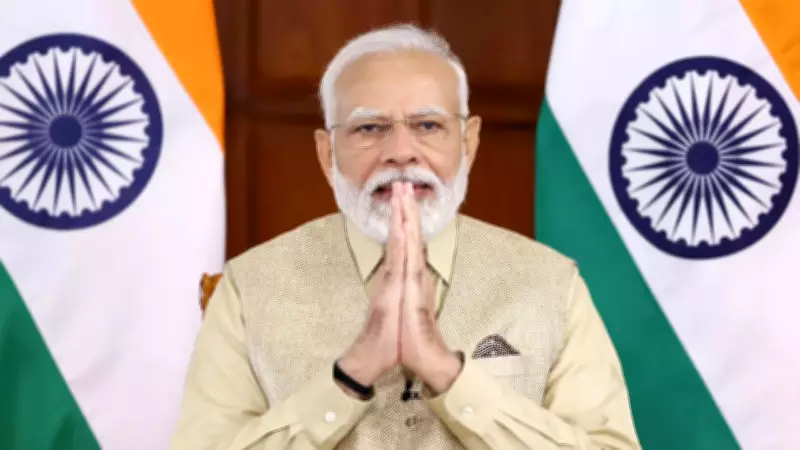
Prime Minister Narendra Modi extended a warm welcome to delegates, stating, "Starting today, India hosts the AI Impact Summit at Bharat Mandapam in Delhi. I warmly welcome world leaders, captains of industry, innovators, policymakers, researchers and tech enthusiasts from across the world for this Summit." He highlighted the summit's theme, "Sarvajana Hitaya, Sarvajana Sukhaya," which translates to welfare and happiness for all, reflecting a commitment to harnessing AI for human-centric progress.
Modi added, "Thanks to the 1.4 billion people of India, our nation stands at the forefront of the AI transformation. From digital public infrastructure to a vibrant StartUp ecosystem and cutting-edge research, our strides in AI reflect both ambition and responsibility." His remarks underscore India's growing technological capacity and its role in global development.

India's Domestic AI Initiatives and Investments
Under the IndiaAI Mission, the government has invested Rs 10,372 crore to build a comprehensive AI ecosystem. Key achievements include:
- Onboarding more than 38,000 GPUs for shared compute access.
- Developing 12 indigenous foundation models.
- Approving over 30 India-specific AI applications across sectors like agriculture, healthcare, and education.
Talent development is central to this effort, with thousands of undergraduate, postgraduate, and PhD students supported through targeted initiatives. Minister of State for MeitY Jitin Prasada emphasized India's participatory approach, stating, "India's approach to AI is anchored in Jan Bhagidari positioning citizens as active participants in this transformation." He noted that structured engagement across states, startups, academia, and civil society is crucial for broadening access to innovation.
Global Participation and Key Themes
The summit features prominent global figures, including:
- French President Emmanuel Macron, tying into the India-France Year of Innovation 2026.
- Brazilian President Luiz Inacio Lula da Silva, leading a large business delegation.
- UN Secretary-General Antonio Guterres, highlighting the international significance of AI governance.
A strong US delegation, co-led by industry leaders such as Shantanu Narayen and Raj Subramaniam, signals expanding collaboration. White House adviser Michael Kratsios remarked, "Looking forward to leading the US delegation to the AI Impact Summit in India this month. America is setting the gold standard for AI innovation, and we want to share it with our global partners." Discussions are expected to cover AI infrastructure, quantum computing, critical minerals, and trusted technologies.
Addressing the AI Adoption Gap
Natasha Crampton of Microsoft stressed the urgency of narrowing disparities in AI adoption between the Global North and South. She said, "The summit arrives at a critical moment. AI is diffusing faster than any other general purpose technology in history. And yet that diffusion is uneven. AI use in the Global North is roughly double that of what we see in the Global South." Her comments align with the summit's focus on democratization, equitable access, and ensuring widespread benefits from AI advancements.
Summit Objectives and Expo Showcase
The AI Impact Expo, spanning over 70,000 square metres, showcases applications across various sectors, demonstrating real-world deployment at scale. Key themes of the summit include:

- Bridging the AI adoption gap between the Global North and South.
- Building trusted and sovereign tech stacks.
- Promoting ethical governance and responsible AI development.
- Ensuring AI augments livelihoods rather than displacing them.
Through working groups and thematic sessions, the summit aims to produce actionable proposals, such as shared compute frameworks and AI commons for public good. This positions India as a bridge between innovation and equitable global impact, leveraging its scale of over 800 million internet users and a fast-growing startup ecosystem.
As the summit progresses, it highlights India's ambition to shape global AI norms while advancing domestic capacity, reinforcing its role in the international technology landscape.