

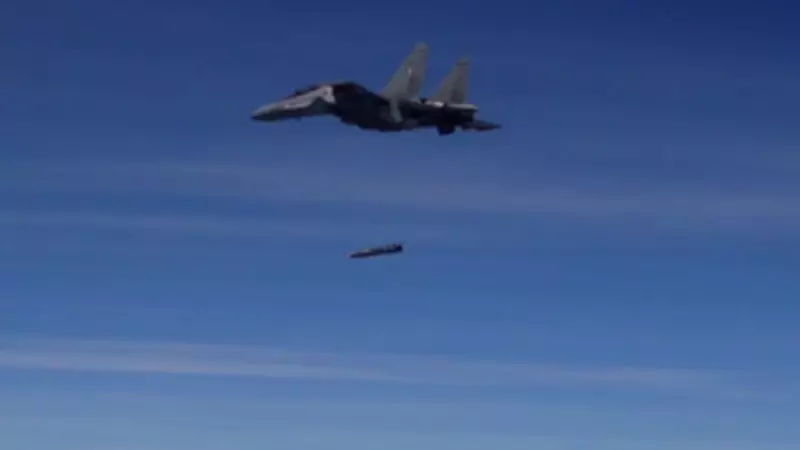
India has achieved a significant milestone in its indigenous precision-strike capabilities with the successful test firing of the RudraM-II air-to-surface anti-radiation missile. The test was conducted jointly by the Defence Research and Development Organisation (DRDO) and the Indian Air Force from an airborne platform under what officials described as extreme release conditions.
Test Details and Objectives
According to DRDO, the test validated the performance of all critical subsystems and successfully established the missile’s intended trajectory. Defence officials confirmed that the RudraM-II air-to-ground anti-radiation missile hit its objectives during the trial, although further specifics are awaited. The missile is designed to destroy enemy radar systems, communication networks, and electronic warfare assets, playing a crucial role in modern warfare by suppressing hostile air-defence systems and creating safer operating conditions for friendly aircraft.
Technical Specifications
The RudraM-II reportedly carries a 200-kilogram payload and can reach speeds of up to Mach 5.5, making it a highly lethal stand-off weapon. It can be launched from altitudes ranging between 3 km and 15 km, providing operational flexibility across different mission profiles. Unlike conventional guided weapons, this anti-radiation missile relies on a passive radar-homing seeker. Instead of emitting signals to locate a target, it detects and tracks radio-frequency emissions generated by enemy radars, communication arrays, and jamming stations. Once locked on, the missile homes in on the source of the emission and destroys it.

Strategic Importance
This test marks another step in India’s efforts to strengthen its indigenous defence capabilities. Anti-radiation missiles like RudraM-II are essential for neutralizing enemy air defences, allowing friendly aircraft to operate with reduced risk. The successful trial underscores the growing sophistication of India’s missile technology and its commitment to self-reliance in defence production.






