IndiaAI Mission 2.0 Launched with Focus on Research, MSMEs, and Sovereign Solutions
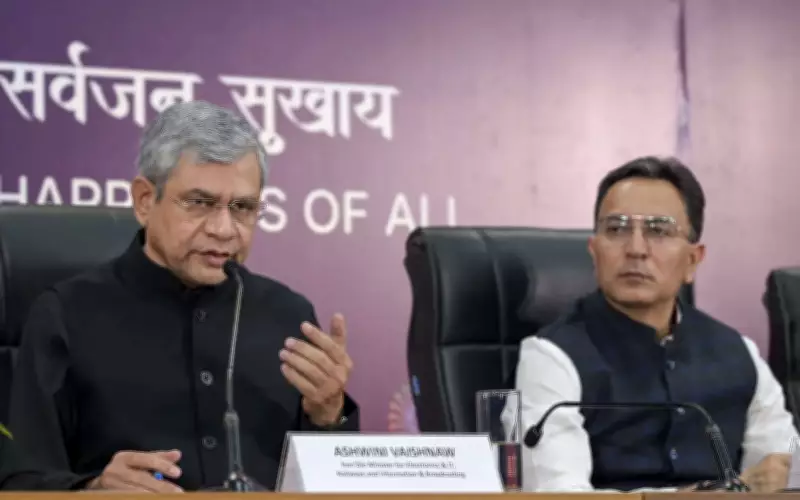
Union IT Minister Ashwini Vaishnaw has detailed the ambitious framework for IndiaAI Mission 2.0, marking a strategic pivot towards enhanced research and development, broader AI adoption, and targeted support for India's vast Micro, Small, and Medium Enterprises (MSME) sector. The announcement was made during the India AI Impact Summit 2026, hosted at Bharat Mandapam in New Delhi, highlighting the nation's growing prominence in global artificial intelligence discussions.
Building on Phase One Successes
Vaishnaw emphasized that Mission 2.0 will expand upon the foundational achievements of the initial phase. These include a shared compute infrastructure boasting over 38,000 GPUs accessible at an affordable rate of ₹65 per hour, sovereign AI models that have surpassed numerous international competitors on critical benchmarks, and a comprehensive skilling program extending across more than 100 colleges nationwide. Notably, Stanford University has recognized India as one of the top three AI nations globally, validating these efforts.
"We have demonstrated our Prime Minister's vision of democratizing technology," Vaishnaw stated. "In contrast to many countries where AI infrastructure is dominated by a few corporations, India has successfully provided AI compute resources to a significant portion of our population."

AI-for-All and Sovereign Solutions Take Center Stage
The most compelling aspect of Mission 2.0 is its plan to deliver AI through ready-to-use, verified solutions tailored for small businesses, inspired by the successful Unified Payments Interface (UPI) model. This initiative aims to assemble a curated collection of trusted tools, rigorously tested across various parameters, and make them openly available for widespread use and innovation. "Many of these solutions will achieve global relevance, much like UPI has become an international standard today," Vaishnaw remarked, adding that Japan has already shown interest in adopting these approaches.
On sovereign AI, the minister clarified that self-reliance encompasses more than just developing indigenous models. It extends to semiconductors, infrastructure, control systems, and applications—essentially ensuring the capability to scale solutions independently without reliance on external approvals or technologies.
Chip Design and Clean Energy Integral to Vision
Semiconductor Mission 2.0 will prioritize chip design, with Vaishnaw projecting the emergence of at least 50 design houses from India in the coming years. The Union Budget 2026–27 has allocated Rs 1,000 crore for this phase, focusing on industry-led research and specialized training centers to foster innovation in this critical field.
Energy sustainability forms another crucial component. Vaishnaw highlighted that India has exceeded the 50% threshold for power generation from non-fossil fuel sources, achieving this milestone five years ahead of its Paris Agreement target. This renewable energy backbone is particularly vital for power-intensive AI data centers, ensuring their operations align with environmental goals.
Overall, IndiaAI Mission 2.0 represents a holistic strategy to cement India's position as a global AI leader, driving economic growth through technological empowerment and self-sufficiency.