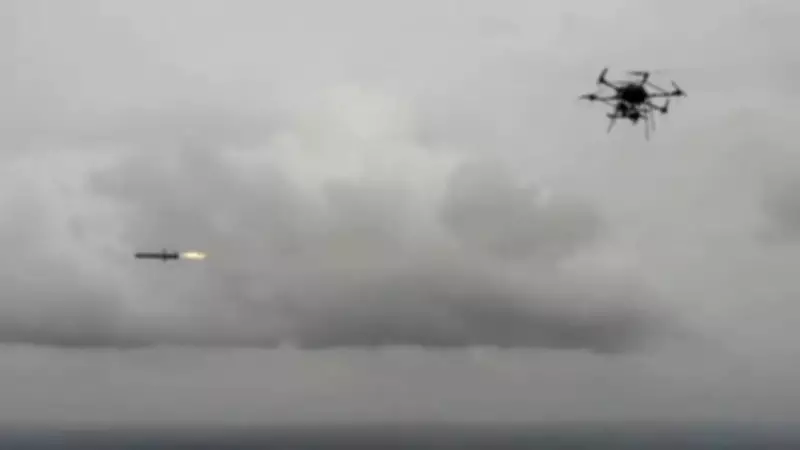
The Indian Army has significantly enhanced its drone attack capabilities with the acquisition of two new indigenous combat systems. The UAV-Launched Precision Guided Munition (ULPGM) and the AGNIKAA VTOL-1 First-Person View (FPV) Kamikaze Drone were handed over to the Army by Adani Defence & Aerospace under the emergency procurement (EP-6) initiative. These systems were indigenously designed, developed, and manufactured, and have successfully passed high-altitude and electronic warfare trials.
Indigenous Development and Collaboration
Both systems were developed in collaboration with the Defence Research and Development Organisation (DRDO). The ULPGM is designed to deliver highly accurate strikes against both soft and hard targets. It is a loitering munition integrated with UAVs, featuring a retractable platform that enhances operational flexibility in electronic warfare (EW) environments. The ULPGM carries a 2-kg warhead and achieves a circular error probable (CEP) accuracy of 1 metre.
The AGNIKAA VTOL-1, on the other hand, is an FPV kamikaze drone engineered for both urban and open battlefield scenarios. It can operate effectively in GPS-denied and electronic warfare environments. The drone has an endurance of 30 minutes and a speed of 60 km/h, making it suitable for rapid, precision strikes.

Operational Deployment
The systems were handed over to the Army's Western Command by Adani Defence & Aerospace several days ago. This procurement is part of the Indian Army's ongoing efforts to modernise its arsenal with cutting-edge indigenous technology, reducing dependence on foreign suppliers and enhancing self-reliance in defence manufacturing.
The induction of these systems marks a significant step forward in India's drone warfare capabilities, providing the Army with versatile and lethal options for both conventional and asymmetric threats.