India's Global Capability Centres Undergo Strategic Transformation into Value Hubs
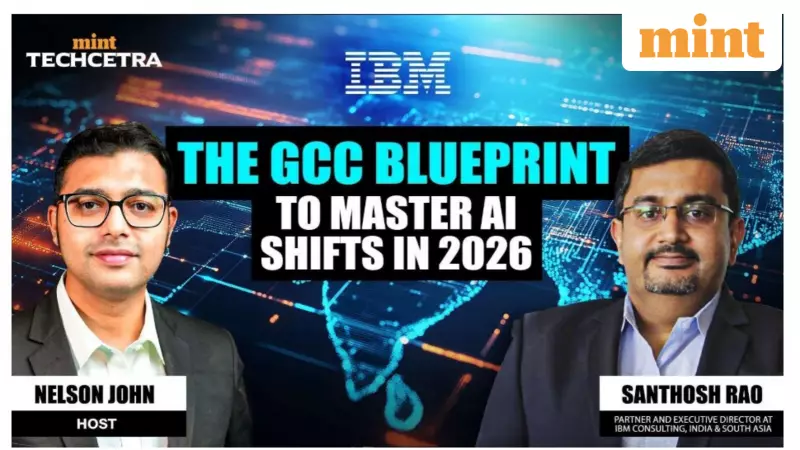
In a recent episode of Mint Techcetra, host Nelson John engaged in a compelling discussion about the structural evolution of India's Global Capability Centres (GCCs). These centres, traditionally focused on execution and operational support, are now undergoing a significant transformation into Global Value Centres (GVCs). This shift represents a fundamental change in how India contributes to global business ecosystems.
From Execution to Innovation: The AI-Driven Evolution
As artificial intelligence and advanced digital technologies continue to reshape global business models, India's GCCs are breaking free from their traditional limitations of cost optimization and operational support. They are increasingly positioned as strategic hubs that influence decision-making processes, accelerate innovation cycles, and shape enterprise strategies at a global level. This transformation marks a pivotal moment in India's journey within the international digital economy.
Santhosh Rao, Partner and Executive Director at IBM Consulting for India & South Asia, joined the discussion to provide expert insights. Drawing from IBM's extensive experience working with enterprises across multiple sectors, Rao elaborated on how AI-led transformation is fundamentally redefining the purpose, impact, and future trajectory of these capability centres.

Advancing Up the Value Chain Through Technology
Rao explained how recent advances in artificial intelligence, automation technologies, and hybrid cloud infrastructure are enabling GCCs to move up the value chain. What were once centres primarily focused on delivery and support functions are now becoming hubs of co-creation where talent, data, and cutting-edge technology converge to deliver measurable business outcomes. This evolution represents a significant upgrade in India's role within global corporate structures.
The Rise of AI-First Organizations and Agentic Models
A central theme of the episode focused on the emergence of AI-first organizations and agentic AI models capable of autonomous reasoning, adaptation, and action. Rao outlined how these advanced technologies are transitioning from experimental pilot programs to scaled deployments, helping enterprises unlock unprecedented operational speed, efficiency improvements, and sustainable competitive advantages in increasingly crowded markets.
IBM's Practical Experience and Real-World Applications
The conversation drew extensively from IBM's own AI implementation journey, highlighting concrete examples of how intelligent systems are being embedded into enterprise workflows. From modernizing legacy infrastructure to driving innovation across diverse industries, these practical applications demonstrate the tangible benefits of AI integration. Rao emphasized the critical importance of moving beyond experimentation phases to full-scale execution and implementation.
Preparing for 2026: Skills, Governance, and Sustainable Growth
Looking ahead to 2026, the episode examined the essential skills and capabilities professionals will need to thrive in an AI-driven enterprise landscape. Talent development initiatives, continuous reskilling programs, and robust AI governance frameworks emerged as crucial enablers of sustainable growth. These elements will determine how successfully organizations can navigate the rapidly evolving technological landscape.
A Defining Moment for India's Global Position
As global enterprises fundamentally rethink how and where value is created within their organizations, India stands at a particularly notable moment in its economic development. The evolution of GCCs into Global Value Centres represents more than just a business opportunity—it signifies a chance to strengthen India's long-term position within the global digital economy. This transformation could potentially reshape how the world views India's technological capabilities and strategic importance.

India's Global Capability Leap: Unlocking AI-Driven Growth in 2026 offers a forward-looking perspective on how artificial intelligence, strategic planning, and talent development are converging to shape the next chapter of enterprise transformation. This discussion provides valuable insights for business leaders, technology professionals, and policymakers navigating the complex future of work and technological advancement.