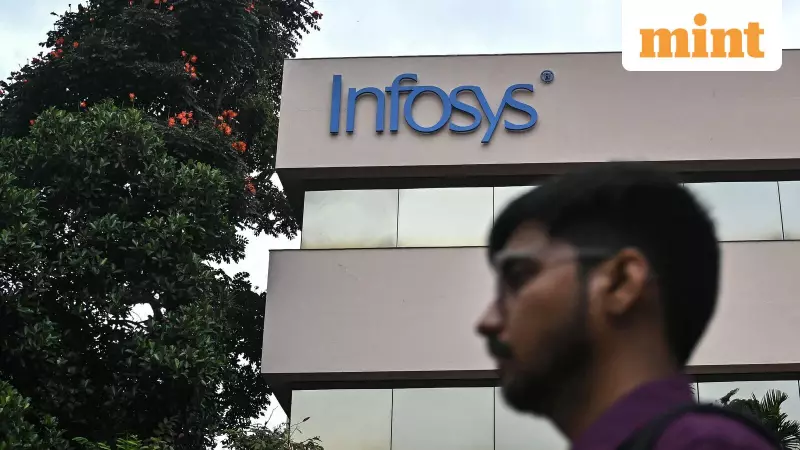
In a significant shift for India's technology employment landscape, Infosys Ltd has become the first homegrown IT services giant to explicitly project a reduction in hiring fresh engineering graduates in the coming years. The company attributes this strategic pivot to rising productivity enabled by automation and artificial intelligence, marking a clear response to the ongoing disruption within the sector.
The Productivity-Driven Hiring Slowdown
Analysts from BMO Capital Markets highlighted this new direction in a research note dated 16 December, following interactions with Infosys management. The note stated, "INFY expects to hire fewer freshers in the future, enabled by higher productivity" and pointed to the company's vision for increasing revenue per employee. While overall headcount is expected to grow modestly, the composition will change, with a smaller proportion of entry-level roles.
This forecast comes despite Infosys being on track to meet its current fiscal year target. Chief Financial Officer Jayesh Sanghrajka confirmed in October that the company aimed to hire around 20,000 freshers in FY26, having already onboarded over 12,000 in the first half. This follows the hiring of 15,000 out-of-college candidates in the previous fiscal year (FY25), when the company's revenue grew 3.85% to $19.28 billion.

A Diverging Strategy Among IT Peers
Infosys's stance creates a notable contrast with the hiring outlook of its major competitors. While Infosys plans to taper fresher intake, other firms are guiding for stability or even an increase.
Cognizant Technology Solutions has adopted a notably different philosophy. Its CFO, Jatin Dalal, stated in late October that the company sees freshers and AI as "complementary," believing that expanding the base of the talent pyramid accelerates the organizational AI journey. Cognizant more than doubled its fresher intake from last year and plans to continue this trend.
Tata Consultancy Services (TCS), while also hiring in volume, is becoming more selective. Chief Operating Officer Aarthi Subramanian emphasized a focus on recruiting "AI-native" freshers who organically understand and use AI tools. TCS, which hired roughly 42,000 freshers last fiscal, has doubled its university trainee intake with this specialized focus.
Similarly, HCL Technologies and Wipro are maintaining or increasing their entry-level hiring. HCLTech's Chief People Officer, Ramachandran Sundararajan, noted that fresher additions in the first half of this year were 92% of the entire previous year's count, with plans to recruit about 12,000 this fiscal. Wipro also expects to hire nearly 12,000 freshers in FY26.
Broader Implications for India's Engineering Graduates
This strategic divergence underscores the uncertainty facing India's vast pool of engineering talent. Fresher hiring has already been muted for two years, a major setback for the approximately 1.3 million students graduating from engineering colleges annually. The trend of reduced intake by major IT outsourcers for the 2026 batch was flagged by Mint in a November report.
Industry analysts interpret the differing approaches as a variance in timeline and strategy. Peter Bendor-Samuel of Everest Group explained that "Infosys has a view that it will quickly eliminate the need for L1 and L2 resources (freshers), whereas Cognizant believes that this shift will happen over a longer period of time."
The sector is grappling with a triple challenge: AI disruption, reduced client spending due to macroeconomic uncertainty, and visa restrictions in key markets like the US. In this environment, as noted by Axis Capital analysts, top tech firms are "recalibrating their talent strategy to target skills and specializations rather than sheer numbers."

Despite the hiring shift, Infosys's financial performance remains robust. The company ended the April-September period with $10 billion in revenue, a growth of 4.26% year-over-year, outpacing three of its big five peers. Only HCLTech, with first-half revenue of $7.2 billion and growth of 5.6%, grew faster.