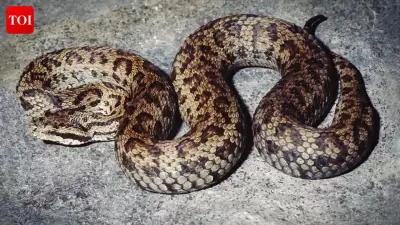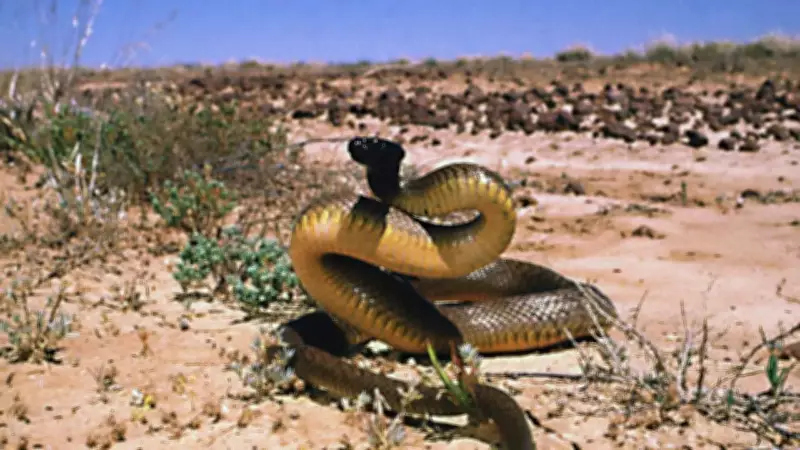
In the sun-scorched heart of Australia, where temperatures soar, droughts can last for years, and life clings to survival by the thinnest of margins, lives a snake that has earned an almost mythical reputation. The Inland Taipan, also known as the "fierce snake," claims the title of the world's most venomous snake. Despite or maybe because of this formidable reputation, the snake is elusive, seldom spotted, and has never caused a confirmed human death. It is more about resilience than raw aggression. This snake is really just a survivor in some of Earth's toughest conditions.
Existing on the Edge
The Inland Taipan (Oxyuranus microlepidotus) resides in Queensland's remote Channel Country and parts of South Australia. This is not the scenery found in Aussie travel pamphlets; think stripped-back landscapes: cracked clay, sparsely dotted plants, wild temperature swings, and capricious rains. According to Australian Geographic, the snake thrives on those far-flung floodplains and black-soil terrains that switch from severe droughts to sudden moisture flushes.
For most of the year, the landscape appears lifeless. During summer, the ground becomes brutally hot. Therefore, Inland Taipans hide in deep soil cracks, old animal burrows, and underground crevices to escape the heat. They emerge only when it is cooler, usually to hunt in the early mornings or evenings.

Their appearance changes with the seasons as well. Most snakes maintain a single color year-round, but not these. In winter, their scales darken to absorb more warmth. In summer, they lighten to avoid overheating. This adaptation is simple yet highly effective for surviving in such a harsh environment.
A Diet Driven by Venom Potency
The Inland Taipan survives largely on long-haired rats in Australia's rough outback. Because food can be scarce, there is no room for prey to escape after being bitten. If a snake's potential dinner scurries off, that represents a crucial meal wasted. Consequently, this snake developed extremely potent venom to quickly incapacitate anything it bites, even if the prey is larger. As Australian Geographic points out, the Inland Taipan's venom acts so rapidly that the snake typically holds onto its prey. Many other venomous snakes release their prey and track it later, but the Taipan does not need to, as its poison works in seconds.
Scientists have investigated the power of the Inland Taipan's venom. A study in Toxicon revealed that the snake's venom delivers a serious punch, affecting multiple bodily systems simultaneously, which explains why it is considered the most toxic snake venom globally.
Some biologists hypothesize that the venom evolved due to an ongoing arms race between predators and prey. As rodents become more resistant to certain toxins, snakes develop stronger venom to secure their meals. Although researchers are still exploring this link specifically, it offers a compelling explanation for the snake's extreme venom.
A Life Controlled by Rain
Despite possessing one of nature's deadliest weapons, the Inland Taipan's fortunes can be quite precarious. The snake's survival depends heavily on the long-haired rat, a native Australian rodent whose population fluctuates. When rains come, these rats multiply rapidly. The Inland Taipan then finds abundant food and thrives. Yet, during dry periods, rat numbers plummet, leaving the snakes hungry. Australian Geographic states that this is key to understanding the snake.
According to ResearchGate's The Medical Journal of Australia: Envenomation by the inland taipan, Oxyuranus microlepidotus, written by Peter Mirtschin, founder of Venom Supplies, one of the world's most feared predators truly relies on rain for its food source. With less rain, the entire ecosystem suffers, altering conditions for the snake. The Inland Taipan, despite its fearsome reputation, is incredibly difficult to spot. Most Australians never encounter this snake. It inhabits extremely remote areas and is quite timid. People on wildlife forums mention that even experienced snake seekers rarely catch a glimpse of it.

Because of its rarity, another surprising fact about the Inland Taipan is that no fatal attack on a human has ever been recorded. Although there have been some bites, all reported incidents involved people such as snake handlers or researchers. The bitten individuals received prompt medical care and survived. A case report published in The Medical Journal of Australia detailed the effective treatment for an Inland Taipan bite and highlighted the critical role of antivenom when used quickly.
In reality, many experts believe the Coastal Taipan poses a greater threat because it is more likely to encounter people, even though the Inland Taipan's venom is actually more toxic.
More Survivor Than Killer
Popular culture tends to portray highly venomous snakes as vicious predators just waiting to strike. However, the Inland Taipan tells a different story. Over thousands of years, evolution shaped every feature: the swift venom, its safe underground homes. This is what makes the snake so remarkable. More than just the world's most venomous snake, it is one of nature's best survivors. The Inland Taipan excels in a place where mere existence is incredibly challenging.