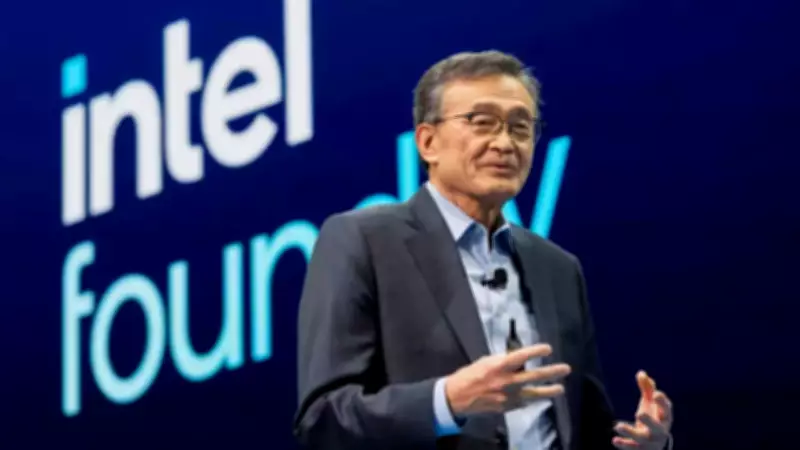
Intel CEO Lip-Bu Tan Expresses Shock Over Huawei's Covert Talent Acquisition
Intel CEO Lip-Bu Tan has publicly admitted his astonishment upon discovering that Huawei has quietly assembled a team of more than 100 elite CPU architects. This revelation comes even as the Chinese tech giant remains barred from accessing the world's most advanced chipmaking tools and design software due to stringent US sanctions.
Recruitment Efforts Unveil Huawei's Hidden Strength
Speaking at Intel's Second Annual AI Summit on February 3, Tan recounted how he stumbled upon Huawei's robust talent pipeline while attempting to recruit senior chip designers for his own company. When he inquired why these engineers chose Huawei despite the restrictions, they responded candidly: "Even though we don't have access to the best tools like EDA from Cadence and Synopsys, we have our own way to do it."
Tan was further taken aback by their confidence in hardware development. Upon mentioning ASML's advanced lithography equipment—which China is legally prohibited from obtaining—the engineers reportedly disclosed they were "quietly building" alternative solutions, showcasing Huawei's determination to innovate independently.

China's Rapid Semiconductor Progress Alarms US Industry
Tan issued a stark warning that Huawei and other Chinese technology firms are narrowing the semiconductor gap at a pace faster than anticipated by the United States. Through sheer engineering effort and infrastructure optimization, Chinese companies are extracting significantly more performance from older 7-nanometer technology. This is achieved by reallocating resources toward software enhancements and system-level improvements, even as the US maintains a lead in cutting-edge process nodes like 2-nanometer.
He also highlighted China's regulatory advantage, noting, "If they decide to have it, they quickly can get all the approval and get it done." This contrasts sharply with the slower approval processes in the United States, particularly concerning power infrastructure for AI data centers, which could hinder American competitiveness.
DeepSeek Emerges as a Wake-Up Call for US Tech
Tan did not limit his concerns to Huawei alone. He pointed to the emergence of DeepSeek as a pivotal moment that caught much of the US tech industry off guard. Additionally, he revealed that multiple well-connected individuals have informed him that in open-source AI development, the United States is now trailing China—a gap he believes requires urgent attention and increased funding to address.
US Chip Advantage at Risk Without Immediate Action
Before US sanctions were imposed in 2020, Huawei was spending approximately $10 billion annually on chips from suppliers like Samsung and SK Hynix. Forced into self-reliance, the company has since expanded to over 200,000 employees globally and is preparing for a product launch in Madrid on February 26, where a new Kirin chipset is expected to debut.
Tan's message was unequivocal: the United States cannot afford complacency in the face of China's rapid advancements. He cautioned, "If you're not careful, they're just ahead of us," emphasizing the need for proactive measures to sustain American leadership in the semiconductor and AI sectors.