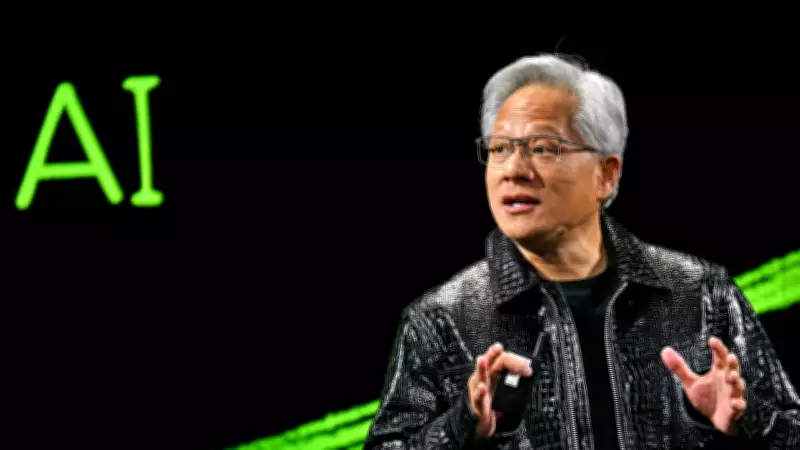
NVIDIA's Jensen Huang Reveals His Daily AI Routine: A Personal Tutor Approach
In the early hours of each day, regardless of whether he is in Singapore, San Jose, Taipei, or any other global location, NVIDIA CEO Jensen Huang engages in a quiet, consistent routine that demonstrates how deeply artificial intelligence has integrated into his professional and personal workflow. This practice reflects his belief that AI is not merely a technological tool but an essential component of modern learning and information processing.
AI as a Daily Tutor and Learning Companion
Before important meetings or critical business decisions, Huang systematically interacts with AI systems by posing questions, following up with additional inquiries, and continuously refining his understanding through iterative dialogue. He has maintained this approach for years, describing AI in practical terms as a "daily tutor" that helps accelerate learning and enhance knowledge accessibility.
"A personal tutor for every single person, that is what AI can be," Huang has stated, emphasizing his vision that AI can empower individuals to learn more rapidly and efficiently in their everyday lives. This perspective directly influences how he incorporates AI into his routine, particularly when encountering topics outside his immediate expertise.

Beyond Basic Search: The Conversational AI Approach
Huang's use of AI extends far beyond traditional search engine queries. Instead of asking isolated questions, he treats AI interactions as ongoing conversations where he asks follow-up questions, reframes queries, and explores different angles until achieving clearer comprehension. He notes that the ability to ask well-structured questions is becoming an increasingly valuable skill in the AI era.
By refining prompts and iterating on responses, Huang moves beyond surface-level answers to gain detailed insights, enabling him to quickly grasp complex subjects that would otherwise require extensive reading. This method allows him to form his own understanding of technological developments, business trends, and emerging innovations without relying solely on team-prepared summaries.
Practical Applications: From Learning to Routine Tasks
In addition to educational purposes, Huang utilizes AI for practical everyday tasks that would otherwise consume valuable time. These applications include:
- Drafting and refining email communications
- Summarizing lengthy documents and reports
- Enhancing written content and presentations
These implementations are functional rather than experimental, helping Huang reduce time spent on repetitive activities and improve overall efficiency. This optimization allows him to focus more attention on areas requiring direct involvement, such as strategic planning and leadership decisions.
Maintaining Human Judgment at the Center
Despite his extensive AI usage, Huang consistently emphasizes that AI serves as a support mechanism rather than a decision-maker. He employs AI to gather information, explore options, and test ideas, but final determinations remain his responsibility.
"I am not asking it to think for me," Huang has clarified, underscoring that human judgment remains central to his workflow. While AI provides valuable inputs and perspectives, it does not replace accountability or leadership decision-making processes.
Verification and Critical Evaluation of AI Outputs
Huang adopts a cautious approach when working with AI-generated responses. Rather than accepting answers at face value, he verifies information by asking questions in different formats or comparing outputs across multiple systems. He compares this methodology to seeking diverse opinions before reaching conclusions, a practice that helps minimize errors and ensures more balanced, accurate information.
AI Proficiency as an Essential Modern Skill
Huang believes that effective AI utilization is becoming a fundamental competency in today's professional landscape. He suggests that individuals who incorporate AI tools into their daily work will possess distinct advantages over those who do not.

"You're not going to lose your job to AI, but you might lose your job to someone who uses AI," Huang has observed, reflecting his perspective that AI is not directly replacing workers but rather transforming how work is accomplished and who can perform it most efficiently.
This comprehensive approach to AI integration demonstrates how one of technology's most influential leaders leverages artificial intelligence not as a replacement for human capability, but as an enhancement to learning, productivity, and informed decision-making.