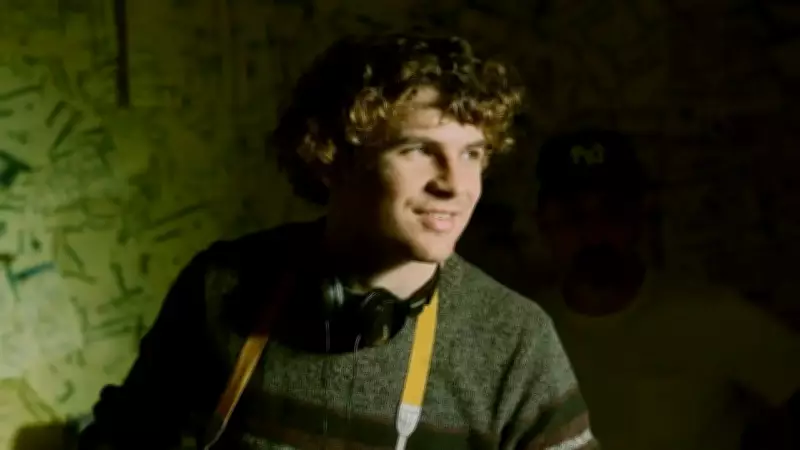
Kane Parsons, the 20-year-old director who has become Hollywood's hottest new talent with his horror drama hit "Backrooms", has expressed a strong desire to eliminate generative AI from the creative landscape. In a recent interview with The Australian, Parsons stated that if he had the power, he would make generative AI disappear forever.
Parsons' Stance on AI in Creativity
The young filmmaker, who transitioned from YouTube creations to directing a full-fledged horror movie for A24 with "Backrooms", emphasized that while generative AI is now a part of visual media, it undermines the purpose of creative work. "Creatively, I get no enjoyment from using those tools. It defeats the purpose entirely for me," he said, adding that he aligns with "most well-adjusted people" on this issue.
AI's Growing Role in Hollywood
Parsons, a Gen-Z filmmaker who built his career online before moving to films, has garnered attention for his critical views on AI. Despite his opposition, the technology is increasingly being adopted by studios eager to cut costs. The debate over AI has divided Hollywood, with figures like Steven Spielberg and Guillermo del Toro speaking out against it, while others like Martin Scorsese, Peter Jackson, and James Cameron have shown openness to its use.

Potential for AI in VFX
Parsons acknowledged that AI could be used to make visual effects tasks less laborious, but cautioned that "right now it's difficult to discuss objectively because there's so much at stake and so many genuinely harmful consequences already happening."
Artistic Exploration of AI Themes
While wary of using AI in filmmaking, Parsons is not opposed to exploring AI-related themes in his work. "What interests me more is interrogating it artistically. We already live in a world where you walk outside and there are billboards and signs that are obvious AI slop. That's become part of our visual reality. To me, generative AI feels less like innovation than a symptom of a broader cultural and economic rot," he explained.
Parsons expressed interest in using AI iconography in art—not to create the art itself, but to examine what it represents. "I definitely want to explore it further in future projects," he said.