Meta's Massive $115 Billion AI Investment Signals Strategic Pivot
In a bold move to dominate the global artificial intelligence landscape, Meta Platforms Inc., the parent company of Facebook, Instagram, and WhatsApp, has announced staggering capital expenditure forecasts for 2026. The tech giant plans to spend between $115 billion and $135 billion this year, nearly doubling its $72 billion expenditure from 2025. This unprecedented financial commitment represents a decisive shift from its earlier metaverse ambitions toward an all-in artificial intelligence strategy.
Unprecedented Infrastructure and Talent Investment
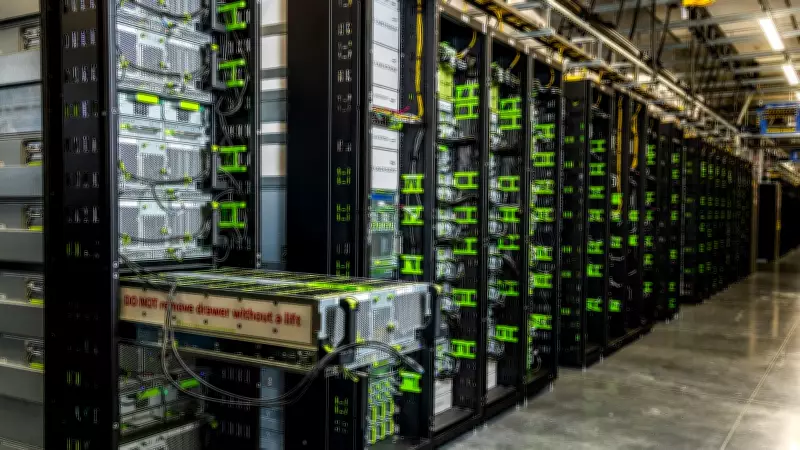
The bulk of Meta's colossal spending will be directed toward building advanced computing facilities and data centers essential for powering next-generation AI systems. Under the newly announced Meta Compute initiative, the company aims to create data centers powered by "tens of gigawatts this decade, and hundreds of gigawatts or more over time," according to CEO Mark Zuckerberg. This infrastructure push is complemented by aggressive hiring of AI researchers and substantial investments in talent acquisition.
Meta's spending trajectory shows remarkable acceleration: from $28 billion in 2023 to $39 billion in 2024, then $72 billion in 2025, before the projected $115-135 billion for 2026. This places Meta's investment potentially ahead of larger AI rivals like Google, which spent $93 billion last year. The company's core online advertising business continues to generate substantial revenue, with fourth-quarter figures reaching $59.89 billion (up 24% year-over-year) and profit of $22.76 billion (up 9.2%), providing the financial fuel for this AI expansion.

Strategic Reorganization and Leadership Changes
After falling behind in the AI race last spring, Meta undertook a comprehensive overhaul of its AI division. The company made its largest investment in June 2025 with a $14.3 billion stake in Scale AI, an AI data labeling startup, and appointed that company's chief executive, Alexandr Wang, as its new chief AI officer. This was followed by a significant reorganization that transferred leadership of AI models and products from longtime executives to new hires.
To develop its next-generation AI model, Meta created TBD Lab, a new research group led by Wang and Nat Friedman, former chief executive of GitHub. Their model, code-named Avocado, is expected to be released in the first half of 2026 and will face its first major test against competing models from Google and OpenAI. Zuckerberg tempered expectations during an investor call, stating, "I expect our first models will be good, but more importantly will show the rapid trajectory we're on."
Metaverse Ambitions Scaled Back
Concurrent with its AI push, Meta has begun scaling back its metaverse investments. The company recently laid off 10% of employees in its Reality Labs division, which oversees virtual reality products. While Meta maintains it hasn't abandoned the metaverse concept entirely and continues investing in products like augmented reality glasses, the division's financial performance has been challenging. Reality Labs posted revenue of $955 million in the last quarter, down from $1.1 billion a year earlier, while recording losses of $6 billion.
Zuckerberg indicated that 2026 might represent the "peak" of losses for Reality Labs. The strategic reallocation of resources toward AI reflects a broader industry trend, with former Meta chief AI scientist Yann LeCun recently criticizing U.S. companies for having a "herd" mentality overly focused on large language models.
Market Response and Future Outlook
Investors responded positively to Meta's announcement, with the company's stock rising 10% in after-hours trading. Independent mobile analyst Eric Seufert noted, "I don't think investors care as much about capital expenditures with Meta now given the consistent traction with their AI optimization tools. The investments are driving real growth across a number of dimensions."

Meta continues to expand its user base, with its family of apps now serving 3.58 billion users (up 7% year-over-year) and its workforce growing 6% to 78,865 employees. The company attributes its revenue growth to AI investments that have improved ad targeting and content recommendations. However, some analysts express concern about whether the benefits of AI can keep pace with the escalating spending. Portfolio manager Uday Cheruvu of Harding Loevner noted, "The benefits of AI have to keep up with the rate of the spending."
Meta's AI acquisition spree continued recently with the $2 billion purchase of Singapore-based AI startup Manus, following a favorable November 2025 court ruling that the company didn't violate U.S. antitrust laws with its earlier acquisitions of WhatsApp and Instagram. To manage its expanding data center banking deals, Meta hired Dina Powell McCormick, a former adviser to President Donald Trump and Goldman Sachs banker, as its new president and vice chair.
In a related development, Zuckerberg's personal philanthropy, the Chan Zuckerberg Initiative, announced layoffs of approximately 8% of its staff (around 70 people) as part of a restructuring around AI and science. A spokesperson stated the organization was making "thoughtful adjustments to our team to ensure we are best positioned to drive this effort forward."