Microsoft President Sounds Alarm on Chinese AI Subsidies in Global Tech Race
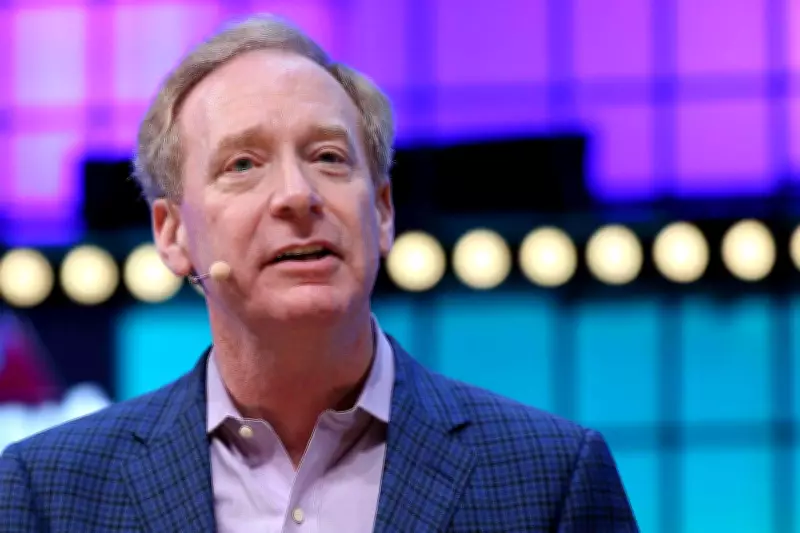
Microsoft President Brad Smith has issued a stark warning about the competitive challenges posed by Chinese government subsidies in the artificial intelligence sector. Speaking during an interview at the AI Impact Summit in New Delhi, Smith emphasized that American technology companies should be concerned about the substantial financial support their Chinese counterparts receive from Beijing.
"Worry a Little Bit" About Chinese Subsidies
"I do think we always have to think about, maybe even worry a little bit about Chinese subsidies," Smith stated during the discussion. He detailed how the Chinese government supports domestic AI companies through multiple channels, including a multi-billion-dollar national investment fund and special vouchers that provide cheaper energy for computing infrastructure needs.
Smith pointed to historical precedent, noting that "the fundamental approach that China successfully took to disrupt the telecommunications market" involved similar state-backed financial support. This strategy helped companies like Huawei and ZTE expand globally, resulting in significant market disruption.

Telecom Precedent and Current AI Landscape
The Microsoft executive explained how Chinese-government supported telecom giants ZTE and Huawei led to the disappearance of some American competitors and put European companies like Ericsson and Nokia on the defensive. "Some American companies disappeared. European companies like Ericsson and Nokia were thrown on the defensive," Smith added, highlighting the potential for similar outcomes in the AI sector.
Turning to the current AI infrastructure landscape, Smith emphasized the critical importance of data centers. He noted that Chinese companies Huawei and Alibaba already operate data centers worldwide, making it relatively straightforward for China to extend subsidies to these facilities. "It will not be difficult for China to subsidize those," he observed.
DeepSeek's Disruptive Impact and Microsoft's Response
This warning follows Smith's earlier comments to the Financial Times about Chinese AI startup DeepSeek, whose technology has seen rapid adoption in emerging markets like Africa. "We have to recognize that right now, unlike a year ago, China has an open-source model, and increasingly more than one, that is competitive," Smith stated earlier this year.
He explained that Chinese companies "benefit from subsidization by the Chinese government" and "benefit from subsidies that enable [them] to basically undercut American companies based on price." This is particularly significant in markets where cost sensitivity drives technology adoption decisions.
The DeepSeek shockwave hit Silicon Valley in January 2025 when the company introduced its powerful AI reasoning model R1, claiming it was trained at lower cost with less computing power. This announcement wiped hundreds of billions from the US stock market, demonstrating the tangible impact of Chinese AI innovation.
Microsoft has taken concrete steps in response to these concerns. The company prohibits its employees from using DeepSeek's AI application due to data security concerns and potential propaganda risks. Speaking at a Senate hearing on winning the AI race in May 2025, Smith confirmed that Microsoft doesn't carry DeepSeek's application in its app store, citing risks related to "data going back to China and the app creating the kinds of content that people would say are associated with Chinese propaganda."
Competitive Challenges and American Advantages
Smith acknowledged the difficult competitive landscape, noting that "If we rely on private capital flows alone, I don't think that will be sufficient to compete with a competitor that is subsidised to the degree that Chinese companies often are." This is especially true in developing regions where affordability drives technology choices.

However, he identified areas where American companies maintain advantages. "What we do have is, as American companies, a stronger reputation for trust. We have access to better chips than the Chinese companies do," Smith explained. Yet he emphasized that "you always have to compete on price," highlighting the fundamental challenge posed by subsidized Chinese alternatives.
Looking forward, Smith called for strategic responses: "I think for the rest of us, we have to compete with that, and we have to be good at competing with that, with the support of our governments." This statement underscores the need for coordinated public-private approaches to maintain technological leadership in the face of state-backed competition.