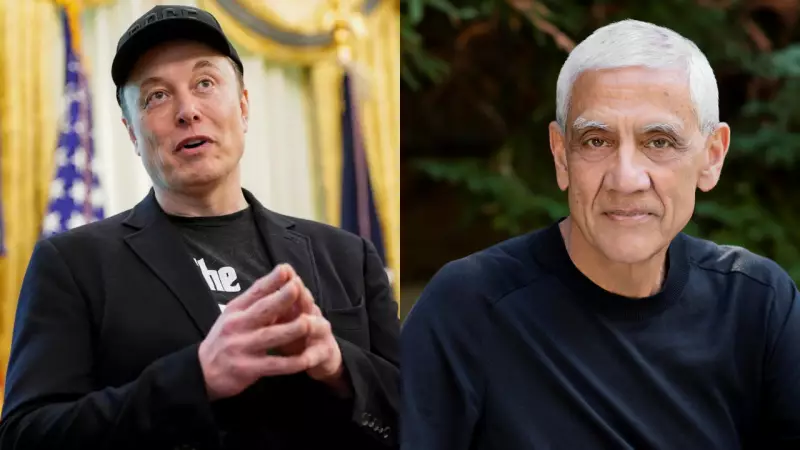
Social Media Feud Erupts Between Tech Titans Over Race Comments
In a dramatic escalation of tensions between two prominent figures in the technology world, Elon Musk has launched a fierce counterattack against billionaire investor Vinod Khosla following a heated social media exchange centered on race and population demographics. The controversy began when Musk made a statement about global population trends that quickly spiraled into personal accusations and defenses of family heritage.
The Initial Spark: Population Remarks and Immediate Backlash
The conflict originated when Elon Musk posted on his social media platform X, formerly known as Twitter, stating that "White people are a rapidly diminishing minority of global population." This observation about demographic shifts triggered an immediate response from Vinod Khosla, who interpreted the comment through a political lens.
Khosla responded directly to Musk's post with a provocative interpretation, suggesting that Musk doesn't want MAGA (Make America Great Again) but WAGA (white America great again). The Indian-American billionaire went further, claiming that Musk's statement reflected a belief that "racism is great and desirable paradigm." In what appeared to be a recruitment attempt, Khosla added that all non-white employees at Tesla and SpaceX, along with what he termed "decent whites," should resign and join his investment portfolio.

Musk's Fiery Response and Personal Defense
Elon Musk did not hesitate to fire back with a strongly worded rebuttal that combined personal insult with family revelation. The Tesla and SpaceX CEO called Khosla "pompous" and used harsh language to criticize his character, referencing a previous controversy about Khosla allegedly trying to restrict public access to a beach near his residence.
More significantly, Musk revealed deeply personal information about his family to counter accusations of racial bias. He stated that his partner, Shivon Alice Zilis, is half Indian and that their eldest son bears a name honoring the renowned Indian physicist Subrahmanyan Chandrasekhar. This disclosure served as Musk's primary defense against suggestions that his population comment reflected racial prejudice.
Background of the Key Figures Involved
Shivon Alice Zilis: Musk's partner is a Canadian technology executive and venture capitalist with significant professional credentials. Born in 1986 to a Punjabi Indian mother and Canadian father, Zilis studied economics and philosophy at Yale University before building an impressive career that includes positions at:
- IBM
- Bloomberg Beta
- OpenAI
- Neuralink (Musk's neurotechnology company)
She and Musk have four children together, including twins named Strider and Azure, a daughter named Arcadia, and a son named Seldon Lycurgus whose middle name, Sekhar, specifically honors Nobel laureate Subrahmanyan Chandrasekhar.
Vinod Khosla: The other participant in this controversy is an Indian-American billionaire entrepreneur with deep roots in Silicon Valley. Born in Pune in 1955, Khosla's career includes:
- Co-founding Sun Microsystems
- Spending 18 years at venture capital firm Kleiner Perkins
- Founding Khosla Ventures, his own investment firm focusing on technology, biotechnology, energy, and artificial intelligence
Khosla Ventures has backed numerous prominent companies including OpenAI and DoorDash, creating an interesting connection to Musk who has repeatedly criticized OpenAI and its CEO Sam Altman in the past. Musk frequently compares his own artificial intelligence model, Grok, with OpenAI's ChatGPT in public statements.
Broader Context and Industry Implications
This public feud occurs against a backdrop of existing tensions between Musk and organizations connected to Khosla. The exchange highlights how demographic discussions among technology leaders can quickly escalate into personal conflicts with racial undertones. Both figures command significant influence in the tech industry, with Musk leading multiple groundbreaking companies and Khosla funding numerous innovative ventures through his investment firm.

The controversy also raises questions about how public figures discuss sensitive topics like race and population demographics on social media platforms. With both individuals having substantial followings, their exchange reaches millions of people and potentially influences public discourse on these important social issues.
As the technology industry continues to grapple with diversity, inclusion, and demographic representation, this high-profile clash between two billionaires demonstrates how quickly such discussions can become personal and contentious. The involvement of family details and heritage claims adds layers of complexity to what began as a statement about global population trends.