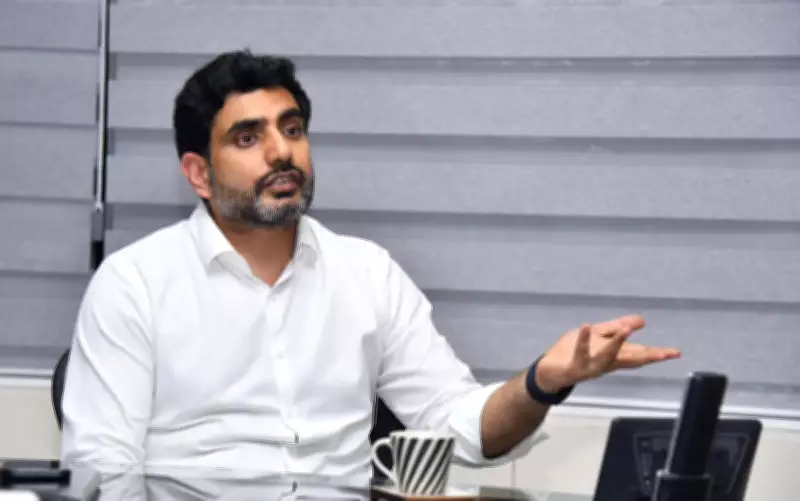
Vijayawada: Andhra Pradesh IT Minister Nara Lokesh has stressed the need to address misconceptions surrounding data centres, emphasizing that public awareness and transparent communication are vital as the state positions itself as a leading artificial intelligence and digital infrastructure hub. Speaking at a fireside chat on “Future Readying India – The Andhra Experience” during the Bank of America India conference in Mumbai on Monday, Lokesh outlined the state’s ambitious plans.
Targeting a 6.5 GW Data Centre Ecosystem
Lokesh stated that Andhra Pradesh is targeting the development of a 6.5 gigawatt data centre ecosystem and is actively building the necessary infrastructure to attract global technology investments. He addressed concerns about the environmental impact of data centres, noting that many apprehensions are based on incomplete information. He highlighted that nearly 3,000 TMC of Godavari water flows into the sea annually, while the proposed data centre ecosystem would require only about one TMC of water. Additionally, a one-gigawatt thermal power plant consumes nearly seven times more water than a one-gigawatt data centre. “We need to engage with people, especially youth, and explain the facts so that concerns can be addressed through informed discussions,” he said.
Factors Behind Rapid Growth
Lokesh attributed Andhra Pradesh’s rapid growth to three key factors: the leadership of Chief Minister Chandrababu Naidu, speed of execution, and strong Centre-state coordination. He said the state’s “speed of doing business” approach has helped attract major investments, including Google’s AI data centre in Visakhapatnam and the proposed ArcelorMittal green steel project.

Support for MSMEs and Industrial Clusters
The minister emphasized that the state values micro, small, and medium enterprises as much as large multinational companies because they generate significant employment at the grassroots level. Andhra Pradesh is exploring further reforms, including deemed approvals, to simplify business operations and encourage entrepreneurship. Highlighting the government’s long-term vision, Lokesh said the state is developing 22 industrial clusters across sectors such as data centres, pharmaceuticals, medical devices, defence, quantum computing, and space technology. The focus is on creating three major economic regions rather than concentrating development in a single city.
Development of Amaravati and Education Reforms
Lokesh said the capital city, Amaravati, is being developed as a world-class greenfield urban centre with educational institutions, hospitals, technology hubs, and research facilities. He added that the core government infrastructure is expected to be ready by 2028. Emphasizing the need to prepare youth for emerging technologies, Lokesh stated that the state is aligning its education system with AI, machine learning, and quantum technologies. “Our goal is to create 20 lakh jobs in five years and produce job creators, not just job seekers,” he said.