NASA Debunks Viral Social Media Hoax About Earth Losing Gravity
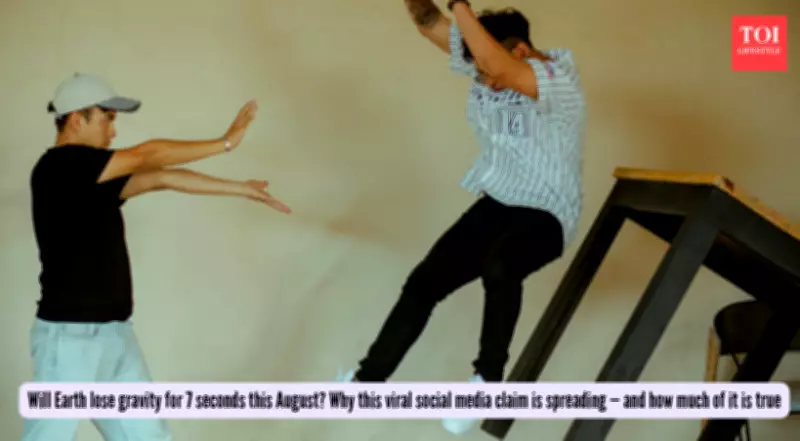
In today's digital landscape, where social media platforms amplify both information and misinformation at unprecedented speeds, ancient fears and modern hoaxes often merge to create viral sensations. One such claim that has recently resurfaced across platforms like TikTok and Instagram suggests a catastrophic event: the Earth will lose gravity for seven seconds on August 12, 2026. This alarming assertion has sparked widespread concern, but is there any truth to it, or is it merely another example of digital deception?
The Origins of the Viral Gravity Loss Claim
The rumor originated from a now-deleted social media account, which posted a detailed but fabricated narrative. According to the post, a secret NASA document titled 'Project Anchor' was leaked in November 2024, outlining a budget of $89 billion to prepare for a seven-second gravitational anomaly. The claim predicted dire consequences, including 40 million deaths from falls, infrastructure destruction, economic collapse lasting over a decade, and mass panic. This post garnered significant traction, with nearly 62,000 likes and 268,000 shares on Instagram alone, highlighting how quickly such misinformation can spread.
Why This Date? The Eclipse Connection
The chosen date of August 12, 2026, coincides with a total solar eclipse visible from the Arctic to Spain. Historically, celestial events like eclipses have been linked to doomsday prophecies and conspiracy theories, despite being precisely predictable for millennia. As reported by fact-checking website Snopes, this timing is a common tactic used by doomsayers to lend credibility to their claims by associating them with rare astronomical phenomena.

The Absurd 'Science' Behind the Hoax
The viral post outlines a bizarre timeline where gravity vanishes abruptly. It claims that after two seconds, objects and people begin floating, reaching heights of 15-20 meters (49-65 feet) by three to four seconds, before crashing down at 7.3 seconds when gravity returns. This scenario blatantly violates fundamental physics, specifically Newton's first law of motion. Without gravity, any initial movement would be minimal unless perfectly timed, making the described massive leaps and catastrophic falls scientifically implausible.
NASA's Official Response: Setting the Record Straight
NASA has categorically debunked this myth. In an email to Snopes, a NASA spokesperson stated, "The Earth will not lose gravity on Aug. 12, 2026. Earth's gravity, or total gravitational force, is determined by its mass. The only way for the Earth to lose gravity would be for the Earth system, the combined mass of its core, mantle, crust, ocean, terrestrial water, and atmosphere, to lose mass." The spokesperson further explained that a total solar eclipse has no unusual impact on Earth's gravity, and while the gravitational pull of the Sun and Moon affects tidal forces, it does not alter Earth's overall gravity, which is well-understood and predictable decades in advance.
The Broader Impact of Social Media Misinformation
This incident underscores the pervasive challenge of misinformation in the digital age. Viral hoaxes, whether about gravity loss or other false catastrophes, can quickly gain momentum, causing unnecessary fear and confusion. It highlights the importance of critical thinking and relying on credible sources like NASA and fact-checking organizations to verify such claims before sharing them.
In conclusion, the claim that Earth will lose gravity for seven seconds in 2026 is entirely false, debunked by scientific evidence and official statements from NASA. As social media continues to shape public discourse, staying informed and skeptical of sensational posts is crucial to navigating the flood of information online.