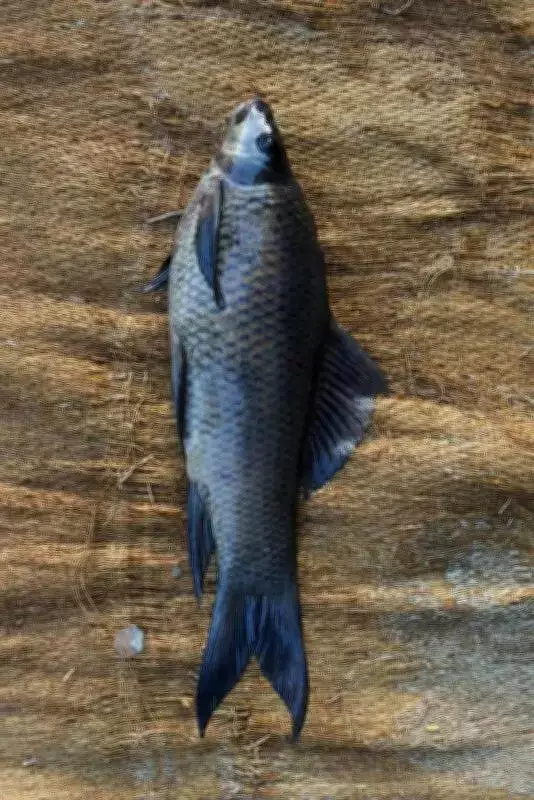
Mysuru: In a significant finding, scientists from the PAGR Centre of ICAR-National Bureau of Fish Genetic Resources (ICAR-NBFGR), Kochi, have discovered a new freshwater fish species, Labeo kaage, from the Shivanasamudra stretch of the Cauvery River basin in Mandya. This discovery adds another member to the mysterious ‘dark labeo' group of fishes from the Western Ghats.
The species was identified by researchers Rahul G Kumar, Charan Ravi, Krishnaprasoon NP, and VS Basheer as part of the institute's ongoing freshwater biodiversity exploration programme. The findings were recently published in the internationally reputed ‘Journal of Fish Biology'. One of the researchers, Charan Ravi, is from Chikkamagaluru district.
The name kaage, derived from the Kannada word for crow, refers to the fish's dark body colour. Locally, it is known as ‘kaage meenu' in Karnataka.

Researchers noted that Labeo kaage is the latest in a series of dark-coloured Labeo species discovered in the Western Ghats. During 2025, the same team also discovered Labeo chekida from the Chalakkudy River and Labeo uru from the Chandragiri River of Kerala. While Labeo chekida is locally known as ‘kaka chekida', Labeo uru was named after the traditional wooden dhow (uru) of the Malabar coast due to its elongated sail-like fins. The scientists also clarified the identity of Labeo nigrescens, the enigmatic ‘Dark Labeo' originally described in 1870, resolving a long-standing taxonomic confusion surrounding the group.
According to the researchers, these discoveries reveal that the rivers of the Western Ghats harbour several unique and previously undocumented freshwater fishes. They warned that increasing threats such as habitat destruction, dam construction, pollution and river modification could endanger many species before they are scientifically documented.
According to Charan Ravi, the initiative was undertaken as part of the Cauvery River exploration project launched in 2016. "The study covering the Karnataka stretch of the Cauvery began in 2018 and was completed in 2022. In the second phase, we will focus on studying fish species in the tributaries of the Cauvery," he said.