Infosys Chairman Warns White-Collar Resentment Could Derail AI Progress
In a stark warning about the future of artificial intelligence, Infosys Chairman Nandan Nilekani has cautioned that resentment among white-collar workers could severely hinder AI advancement if the transition is not managed with extreme care. Drawing a powerful historical parallel, he emphasized that just as blue-collar resentment contributed to the disruptions of globalization, similar discontent among professional workers could lead to what he termed "the train wreck of AI."
Historical Parallels and Present Dangers
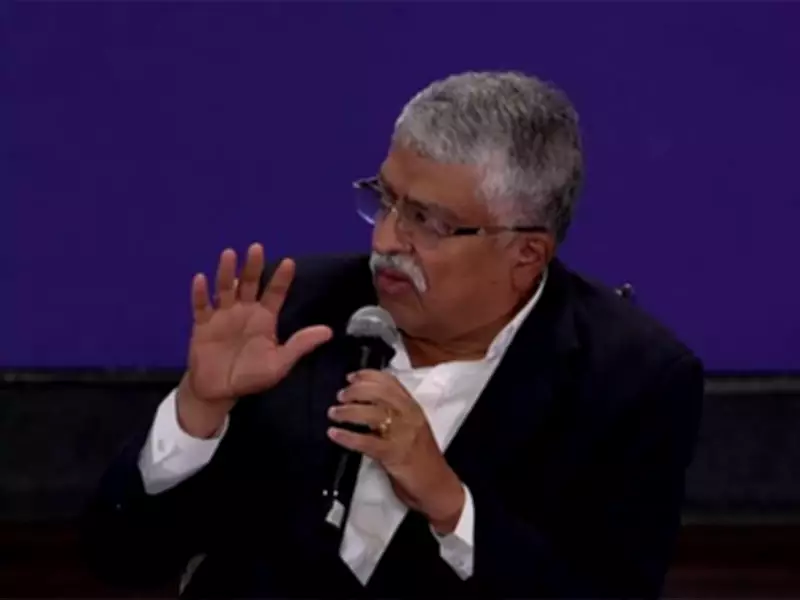
Speaking during a fireside chat with Dario Amodei, co-founder of leading AI company Anthropic, Nilekani articulated his concerns with remarkable clarity. "Resentment of blue-collar workers led to the train wreck of globalization, and resentment of white-collar workers would lead to the train wreck of AI," he stated unequivocally. This comparison highlights how workforce discontent can derail even the most promising technological transformations when human factors are neglected.
The Infosys chairman elaborated on the dual nature of AI development, noting that "in AI, there is a race to the top and a race to the bottom; the latter is faster." This observation underscores the urgency of ensuring that AI diffusion benefits humanity broadly rather than creating negative consequences that become difficult to manage.

Building Meaningful AI Use Cases
Nilekani stressed the critical importance of developing and showcasing AI applications that genuinely improve ordinary lives. He identified several priority areas where AI could make substantial positive impacts:
- Increasing farmers' incomes through better agricultural technologies
- Enhancing educational outcomes with personalized learning tools
- Improving healthcare accessibility and effectiveness
- Expanding language access to bridge communication gaps
These use cases represent what Nilekani views as essential demonstrations of AI's potential to serve broader societal interests rather than merely corporate or elite concerns.
The Comprehensive Approach Needed
The technology leader argued that achieving beneficial AI diffusion requires far more than just technical innovation. "Technology is just one piece of the puzzle," he explained. "It is about institutions, trust-building, negotiations, and guardrails." This comprehensive perspective acknowledges that successful AI integration depends on multiple interconnected factors beyond mere technical capability.
Nilekani specifically highlighted several essential components for responsible AI advancement:
- Thoughtful policymaking that anticipates workforce impacts
- Active support for career transitions and reskilling programs
- Deliberate trust-building between stakeholders
- Careful negotiation of implementation frameworks
India's Potential Role in AI Development
Looking toward the future, Nilekani proposed an ambitious vision for India's role in the global AI landscape. He suggested that India should become the use-case capital for AI diffusion, positioning the country as a global leader in demonstrating how artificial intelligence can be implemented responsibly and beneficially across diverse sectors and populations.
This vision aligns with his broader concern about managing AI's negative effects, which he identified as including the proliferation of deepfakes and potential increases in utility costs. By focusing on building trust and creating tangible benefits, Nilekani believes these challenges can be addressed proactively rather than reactively.
The Infosys chairman's remarks come at a crucial moment in AI development, as governments, corporations, and societies worldwide grapple with how to harness this transformative technology while minimizing disruption and maximizing benefit for all segments of the population.