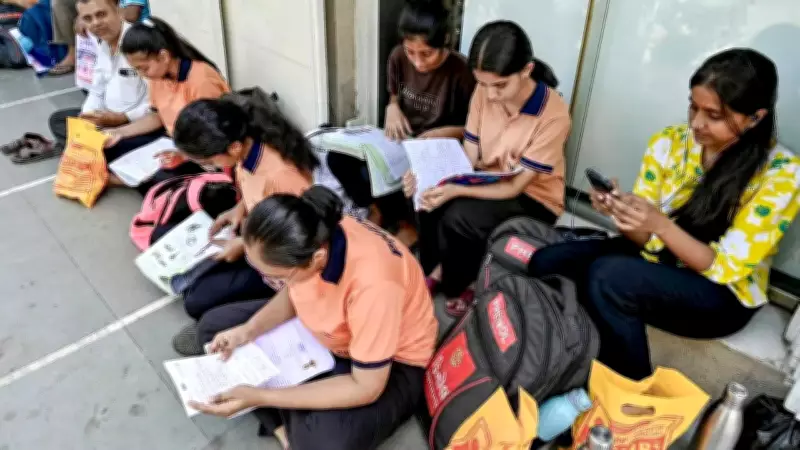
The National Testing Agency (NTA) on Friday informed the Supreme Court that it has undertaken a comprehensive overhaul of its examination and security framework following the NEET-UG 2026 paper leak. In an affidavit submitted to the apex court, the agency detailed a series of measures aimed at strengthening exam security, including forensic analysis of CCTV footage, mandatory mock drills, and stricter monitoring of examination centres.
The affidavit comes weeks after the NEET-UG 2026 examination was cancelled due to allegations of a paper leak, which sparked nationwide protests and intensified scrutiny of the conduct of high-stakes entrance exams. The matter relates to petitions filed by the Federation of All India Medical Association (FAIMA) and the United Doctors Front (UDF), which called for a complete overhaul of the NTA following the leak.
Key Measures Announced
The NTA stated that a high-powered steering committee (HPSC) reviewed preparations for NEET-UG 2026 during a meeting on April 17 and recommended several strict safeguards before, during, and after the examination. These measures include:

- Mandatory CCTV checks at examination centres
- Preservation of CCTV footage for at least 90 days
- Conducting mock drills
- Weather-related contingency planning
- Verification of power backup systems
- Emergency medical support
- Detailed inspections of examination centres in the week leading up to the test
The agency also noted that the committee recommended forensic analysis of CCTV footage after the examination to identify suspicious activity or irregular conduct that may not be detected in real time.
Future of NEET Exams
In a significant development, the NTA informed the court that the steering committee will reconvene after NEET-UG 2026 to decide, in consultation with the Ministry of Health and Family Welfare, whether future NEET exams should transition to a Computer-Based Test (CBT) format or continue with the existing Pen-and-Paper Test (PPT) mode.
Implementation of Expert Recommendations
The affidavit further stated that several recommendations made by the High-Level Committee of Experts (HLCE) have already been implemented or are in the final stages of execution. As part of the restructuring, the NTA has created 16 new senior-level posts, including Director and Joint Director positions. Two joint secretary-rank officers have been appointed as Additional Director Generals to oversee technology operations and examination security. Additionally, a Secretary-level officer was appointed as Director General of the NTA in March 2026.
Experts from institutions such as the Indian Institutes of Technology, University Grants Commission, Central Board of Secondary Education, Kendriya Vidyalaya Sangathan, and Indira Gandhi National Open University have been brought in to strengthen exam management and security systems.
Coordination with State Authorities
The NTA told the court that state-level coordination committees (SLCCs) and district-level coordination committees (DLCCs) have been formed nationwide to ensure secure conduct of examinations. According to the affidavit, 18 SLCCs and 621 DLCCs were operational by the time NEET-UG 2026 was conducted on May 3. These committees include officials from local administration, police, intelligence agencies, the National Informatics Centre (NIC), and the NTA to improve surveillance and coordination during examinations.
The Supreme Court is expected to hear the matter soon. The latest developments come weeks after NEET-UG 2026, held on May 3, was cancelled following allegations of a paper leak, triggering nationwide outrage, student protests, and sharp political backlash.