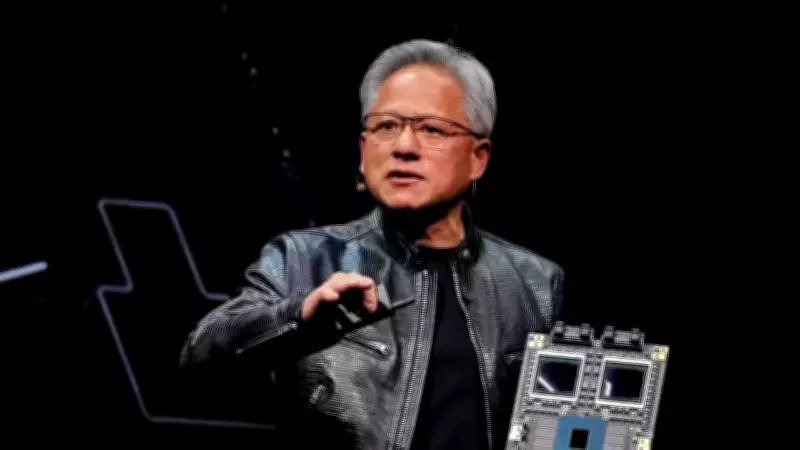
Nvidia CEO Jensen Huang Defends DLSS 5 Against AI Filter Criticism
Nvidia CEO Jensen Huang has issued a forceful rebuttal against mounting criticism of DLSS 5, the company's newly unveiled AI-powered neural rendering technology showcased at GTC 2026. When questioned by Tom's Hardware about complaints that the technology degrades game visuals and undermines artistic intent, Huang responded with unequivocal clarity.
"They're Completely Wrong": Huang's Direct Response
"Well, first of all, they're completely wrong," Huang stated emphatically when addressing the criticism. His defense centers on the fundamental technical architecture of DLSS 5, which he explained operates at a deeper level than critics have suggested.
The technology doesn't override artistic work—it builds upon it through a sophisticated fusion process. Huang detailed how DLSS 5 integrates a game's existing geometry, textures, and motion vectors with advanced generative AI capabilities. Crucially, he emphasized this isn't merely a post-processing filter applied to finished frames.

"It's generative control at the geometry level," Huang clarified, noting that developers retain significant control to fine-tune the model according to their specific visual style preferences. This architectural approach, he argued, preserves artistic direction rather than diminishing it.
The Backlash: Why Gamers See an "AI Filter"
The controversy erupted almost immediately after Nvidia released demonstration footage showing DLSS 5 applied to popular titles including Resident Evil Requiem and Hogwarts Legacy. Critics—including several prominent game developers—described the results as appearing airbrushed, excessively shiny, and lacking in distinctive character.
Thomas Was Alone developer Mike Bithell commented that the technology seemed designed for situations where you "absolutely, positively, don't want any art direction." Gunfire Games concept artist Jeff Talbot offered an even more direct assessment, labeling it "just a garbage AI filter."
It's important to contextualize that Nvidia's demonstration utilized maximum settings across two RTX 5090 graphics cards—with one GPU dedicated entirely to running the DLSS 5 model. The consumer version scheduled for release in fall 2026 will be optimized for single-GPU configurations and is expected to offer more nuanced implementation.
Historical Precedent: Huang Points to Ray Tracing
Huang drew parallels to ray tracing technology, which Nvidia introduced in 2018 and initially faced similar skepticism from the gaming community. "Everybody said ray tracing was FUBAR," Huang recalled during the Tom's Hardware Q&A session, referencing the initial resistance that eventually gave way to widespread adoption across PC gaming.
Whether DLSS 5 follows this same trajectory from skepticism to mainstream acceptance remains uncertain. Nvidia has considerable time for refinement and demonstration before the feature's scheduled fall 2026 launch, with more controlled showcases likely to emerge in the intervening period.
The debate highlights ongoing tensions between technological advancement and artistic preservation in game development, as AI-powered tools become increasingly sophisticated and integrated into creative workflows.