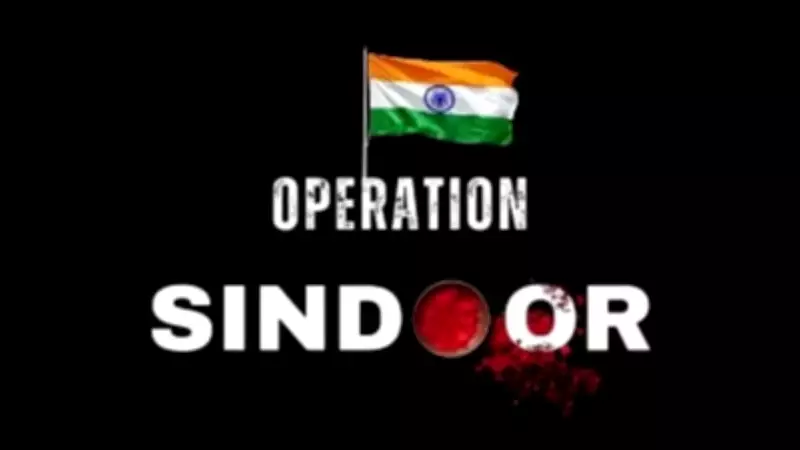
Operation Sindoor: A Defining Moment in India's Counter-Terror Doctrine
One year ago, on May 7, 2025, the Indian Armed Forces launched Operation Sindoor, a focused military operation targeting terrorist infrastructure in Pakistan and Pakistan-occupied Jammu and Kashmir (PoK). The Ministry of Defence issued a statement at 1:44 am confirming the operation, stating that nine sites had been targeted. The operation was described as "focused, measured, and non-escalatory in nature," with no Pakistani military installations struck.
Background: The Pahalgam Attack
The chain of events leading to Operation Sindoor began on April 22, 2025, when terrorists from The Resistance Front (TRF), a proxy of Lashkar-e-Taiba, attacked civilians in Pahalgam's Baisaran Valley, killing 26 people, including a Nepali national. The attack drew widespread condemnation and outrage across India.
India's Diplomatic Response
On April 23-24, India downgraded diplomatic ties with Pakistan, suspended the Indus Waters Treaty, sealed the Attari-Wagah border, declared Pakistani diplomats persona non grata, and suspended visas for Pakistani nationals. India also conducted naval missile tests and large-scale Indian Air Force drills. Prime Minister Narendra Modi vowed action, stating, "India will identify, track, and punish every terrorist and their backers." Pakistan retaliated by suspending visas for Indians, shutting its airspace to Indian-operated aircraft, halting trade, and suspending the Simla Agreement.

Escalation of Tensions
On April 27, during Mann Ki Baat, PM Modi expressed deep anguish over the attack. By April 30, Pakistan claimed credible intelligence that India was preparing military action within 24-36 hours.
Operation Sindoor: Execution and Targets
In the early hours of May 7, India launched Operation Sindoor from Indian soil, targeting nine terror camps in Pakistan and PoK within a 25-minute window (1:05 am to 1:30 am). The operation was a tri-services effort, targeting camps linked to Lashkar-e-Taiba (LeT), Jaish-e-Mohammed (JeM), and Hizbul Mujahideen.
Targeted Terror Camps
- Shawai Nallah Camp, Muzaffarabad (PoK): An LeT training facility linked to the Sonamarg, Gulmarg, and Pahalgam attacks.
- Muridke, Pakistan: A major terror hub where 26/11 attackers were trained.
- Sarjal Camp, Sialkot: An LeT facility linked to attacks on J&K Police personnel.
- Markaz Ahle Hadith, Barnala (PoK): A centre for weapons, IED, and jungle warfare training.
- Markaz Abbas, Kotli (PoK): A camp used for training fidayeen attackers.
- Mehmoona Joya Camp, Sialkot: A Hizbul Mujahideen control centre linked to operations in the Kathua-Jammu belt and the Pathankot airbase attack.
- Markaz Subhan Allah, Bahawalpur: The headquarters of Jaish-e-Mohammed.
- Syedna Bilal Camp, Muzaffarabad: A JeM weapons and explosives training facility.
- Maskar Raheel Shahid Gulpur Camp, Kotli: An LeT camp linked to the 2023 Poonch attack and the 2024 pilgrimage bus attack.
Mock drills were conducted in several Indian cities to prepare civilians for any escalation.
Pakistan's Response and India's Retaliation
On the night of May 7-8, Pakistan launched approximately 300-400 drones across 36 locations targeting military infrastructure. Indian forces intercepted many using kinetic and non-kinetic systems. Pakistan also initiated heavy shelling along the Line of Control (LoC), killing 16 civilians in Jammu and Kashmir. India's response remained precise and non-escalatory, targeting only terrorist infrastructure.
On May 9, after Pakistan targeted Indian military bases, India launched a major retaliatory strike. IAF drone strikes destroyed a Chinese-origin HQ-9 surface-to-air missile and radar system in Lahore, and other locations including Rawalpindi, Gujranwala, Attock, Bahawalpur, Miano, and areas near Karachi. Pakistan attempted strikes on Indian Air Force bases and Army installations, but India's multi-layered air defence network, led by the S-400 Triumf missile system, intercepted the attacks.

Ceasefire and Aftermath
On May 10, an understanding was reached between the Directors General of Military Operations (DGMOs) of both countries to halt all military activity from 5 pm IST. However, violations occurred shortly after, with explosions heard in Srinagar. Normalcy returned after a three-day confrontation, during which India inflicted significant damage on Pakistani military assets. DGMO Lt Gen Rajiv Ghai stated that 35-40 Pakistani military personnel were killed, and Defence Minister Rajnath Singh said more than 100 terrorists had been eliminated.
On May 12, PM Modi addressed the nation, dedicating Operation Sindoor to every mother and sister of the country. Pakistan later confirmed 11 military personnel killed and 78 injured.
One Year Later: A New Doctrine
Army chief General Upendra Dwivedi described the military phase of Operation Sindoor as an 88-hour campaign, warning Pakistan against repeating such barbaric acts. The Indus Waters Treaty remains suspended, reflecting India's hardened position that terror and talks cannot go together. In his Independence Day speech, PM Modi stated, "India has now decided, blood and water will not flow together."
Operation Sindoor is increasingly viewed as a turning point in India's approach to cross-border terrorism, establishing a new normal in the country's security doctrine. The operation demonstrated India's willingness to respond swiftly and decisively to terrorist attacks, while maintaining a measured and non-escalatory stance to avoid full-scale war.