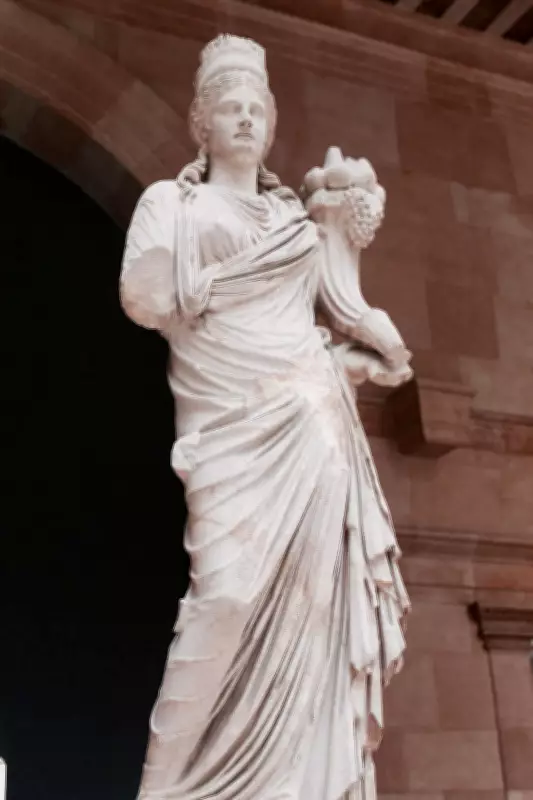
When you think of ancient Greece under the night sky, what comes to mind? Most likely, you envision a land filled with white marble. This imagery stems from the Parthenon, which we have been taught since childhood is an ethereal structure made entirely of white, pure ivory stone, standing in stark elegance against the Mediterranean sun. History books have long portrayed this as a symbol of "classical purity." However, we now realize that this picture of classical purity was a massive misrepresentation of ancient history.
The Science Behind Hidden Colors
For generations, it was assumed that the white and pristine statues in museums were intentionally left uncolored. Yet, the Parthenon has been steadily disproving this fallacy for those who pay attention. What we considered minimalist in design was actually created that way through centuries of erosion and weathering, combined with modern preferences for erasing historical traces.
Importantly, researchers did not stumble upon an ancient paintbrush to reach their conclusions. Instead, they used modern science and technology. Scientists thoroughly studied the Parthenon Sculptures in the British Museum using non-invasive procedures to detect previously invisible traces. According to a report titled Paint and the Parthenon: Conservation of Ancient Greek Sculpture, these tests conclusively showed clear evidence of Egyptian Blue on certain figures. This artificial blue pigment, rare and costly at the time, was applied to robes and decorations. Thus, it was concluded that the temple was entirely colorful, adorned with vibrant red, blue, and possibly gold gilding. Ancient Greece, long envisioned as a realm of pure white marble, is now revealed to have been vibrantly colorful.

Why Did the "White Marble" Narrative Fool Us?
This raises the question: if there was such an abundance of color, why do we think the Parthenon was always white? Partly, it is due to the effects of time and our culture's fascination with the classical period. Over millennia, weather washed away the colors. When Renaissance artists rediscovered the ruins, they saw only white marble.
This misconception was further solidified by an aesthetic bias against polychromy—the use of multiple colors. European scholars of the 18th and 19th centuries declared that white marble represented the height of sophistication and restraint. They ignored the faint traces of paint still visible at the time, preferring to promote an image of antiquity that felt more like a refined museum than a lived-in city. The "white" Greece we see in movies today is essentially a set-design choice made by people who lived two millennia after the Parthenon was built.
Reassessing History Through Color
In this sense, reassessing the Parthenon based on color is not just about altering a building but changing how we perceive the past. Realizing that Greeks appreciated patterns and color transforms antiquity from a graveyard of silent monuments into a vibrant, living culture. Far from being an austere representation of silence, the Parthenon now stands out in high definition and technicolor, revealed to us for the first time by science.
About the Author
The TOI Science Desk is an inquisitive team of journalists ceaselessly delving into discoveries to curate captivating news, features, and articles from the ever-evolving world of science for Times of India readers. Consider us your scientific companion, delivering daily wonder and enlightenment—from genetic engineering to space exploration and artificial intelligence. We are storytellers of scientific narratives, committed to demystifying science and making it accessible for all.