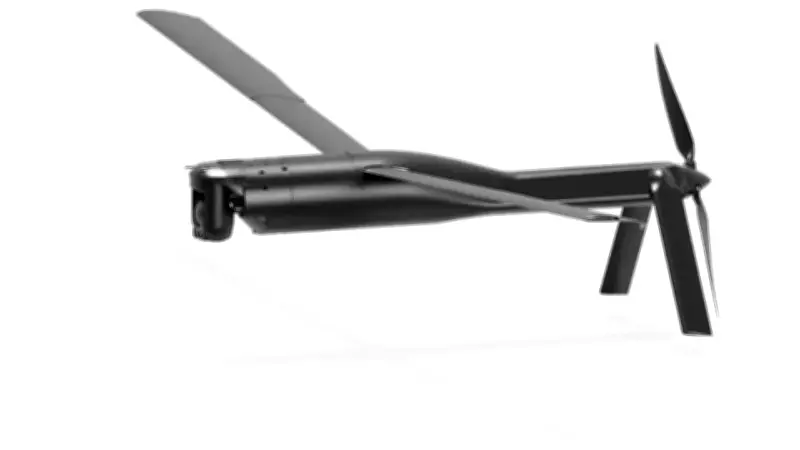
The Pentagon has proposed a record investment in autonomous warfare, seeking approximately $54 billion for the Defence Autonomous Warfare Group (DAWG) under its fiscal year 2027 defence budget. This comes as part of President Donald Trump's proposed $1.5 trillion defence budget for 2027, one of the largest hikes in US defence spending history.
Shift in Defence Strategy
The funding aims to rapidly field hundreds of thousands of low-cost attack drones and autonomous systems. This move reflects a growing shift in US defence strategy, shaped by lessons from recent conflicts in Ukraine and West Asia. The Pentagon plans to rely heavily on a growing network of defence technology companies specialising in autonomous systems. This initiative marks a change from the traditional dominance of a handful of large defence contractors in US military programs. The drone dominance initiative is drawing a mix of established firms and emerging startups capable of rapidly designing and producing at scale.
From Replicator to DAWG
While the Pentagon has not publicly released a definitive list of drone systems for the FY2027 Drone Dominance initiative, earlier programs such as Replicator offer indications of the capabilities sought. Replicator, launched in August 2023, was designed to counter China's numerical advantage and accelerate the adoption of autonomous technologies. It prioritised affordable drones that could be produced and deployed at scale, becoming a testing ground for several systems and procurement models. The initiative was heavily influenced by the Ukraine war, where inexpensive drones proved capable of destroying tanks, artillery, and other high-value assets.

The Pentagon dissolved the Replicator initiative in late 2025 and absorbed it into the newly created Defence Autonomous Warfare Group (DAWG), consolidating US autonomous warfare efforts under a single organisation. Replicator selected a range of reconnaissance drones, loitering munitions, and precision-strike platforms deemed suitable for future high-intensity conflicts.

Selected Drone Systems
- Switchblade 600 (AeroVironment): A tube-launched loitering munition designed to destroy armoured targets, with approximately 40 minutes of endurance.
- Altius-600 (Anduril Industries): A tube-launched autonomous drone for reconnaissance, electronic warfare, and strike missions. Its modular design supports multiple payloads, and swarm networking allows coordinated operations. The strike variant, Altius-600M, offers up to four hours of endurance and a range of about 450 km.
- Ghost-X (Anduril Industries): Designed for Intelligence, Surveillance and Reconnaissance (ISR) missions, with a modular payload architecture and rapid deployment capability, providing real-time battlefield awareness.
- Coyote LE SR (RTX Raytheon): A low-cost, tube-launched autonomous drone for reconnaissance, electronic warfare, communications relay, and one-way attack missions. It weighs 12.2 kg, has a range of 160 km, and an endurance of 90 minutes.
- Indago 4 (Lockheed Martin): A small tactical reconnaissance quadcopter for frontline troops, weighing around 3.4 kg with an endurance of 50-70 minutes.
- Red Wolf (L3Harris Technologies): A low-cost launched effect for long-range precision strikes, with a range of more than 350 km and endurance of 60 minutes.
- Barracuda-500 (Anduril Industries): Selected for the US Air Force and Defence Innovation Unit's Enterprise Test Vehicle (ETV) program. It is a low-cost, mass-produced autonomous strike platform with a payload of 45 kg and a range of 900 km.
- LUCAS (SpektreWorks): A low-cost one-way attack drone with a range of about 800 km, endurance up to six hours, and an 18 kg warhead. Inspired by the Iranian Shahed-136, it is designed for mass production and swarm operations.
Implications for Future Warfare
The Pentagon's massive investment in autonomous warfare reflects a fundamental shift in US military strategy: from a small number of highly sophisticated and expensive platforms to a large number of low-cost autonomous systems. This shift is driven by lessons from recent conflicts, particularly in Ukraine, where inexpensive drones have repeatedly challenged sophisticated military equipment. Future wars may not be decided solely by advanced fighter jets, warships, or missiles, but by the ability to rapidly produce and deploy thousands of autonomous systems.