In the Himalayas, ecology is not a distant environmental concern—it is integral to everyday survival. It determines whether a road remains open after heavy rain, whether a village stays connected to markets and hospitals, and whether a hillside above a settlement remains stable. When landslides strike, rain often takes the blame. Yet, in many cases, the real causes begin much earlier with indiscriminate slope cutting, poor drainage, removal of vegetation, fragile mountain geology, and increasingly erratic rainfall.
Growing Pressure on Fragile Slopes
Landslides are not new to the Himalayas. The mountains are naturally young, fragile, and prone to erosion. What has changed is the growing pressure placed on this sensitive landscape. Expanding road networks, large-scale hill cutting, and changing climate patterns are making slopes more vulnerable than ever before. Short bursts of intense rainfall now trigger disasters more frequently, disrupting transport, education, healthcare, and emergency services across the region.
Mountain communities have long understood the behavior of slopes, springs, and forests through generations of experience. Today, that traditional knowledge is increasingly being complemented by scientific research aimed at making Himalayan infrastructure safer and more resilient.

Can Plants Help Prevent Landslides?
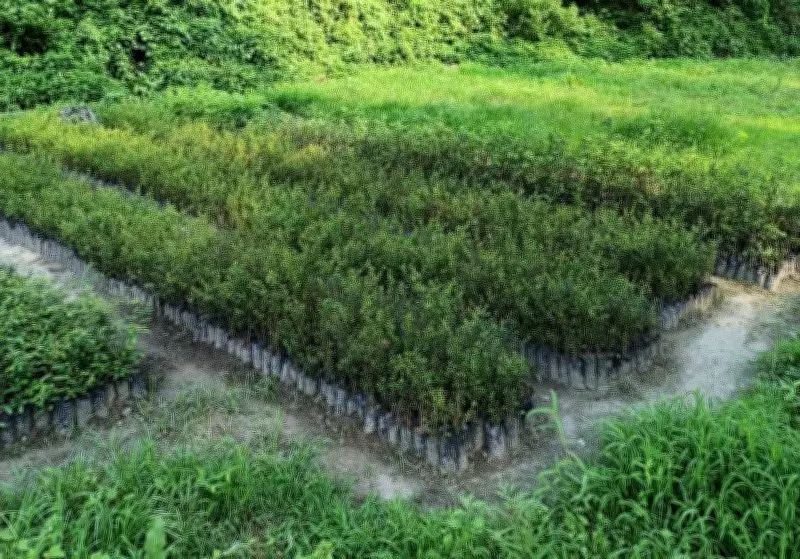
One of the most promising questions researchers are exploring is deceptively simple: can plants help prevent landslides? The answer is yes—but only when the right species are planted in the right place. Plant roots bind soil particles, reduce surface erosion, improve slope stability, and influence how water moves through the ground. In effect, vegetation can function as a natural reinforcement system alongside conventional engineering.
In the Himalayas, slope protection cannot be separated from ecology. A roadside slope is not just soil to be retained; it is a living system of roots, water, vegetation, and people. If understood scientifically, plants can become part of our disaster-resilience infrastructure.
IIT-Mandi's Bioengineering Research
Researchers at IIT-Mandi, with academic collaboration from Dr. Prashanth Vangla of IIT-Delhi, are studying nature-based and bioengineering solutions for Himalayan slopes. Rather than simply advocating more plantation, their research asks a more important question: Which plant species are best suited to different types of slopes?
Their studies examine characteristics such as root tensile strength, root architecture, root area ratio, and apparent root cohesion. These properties determine whether a plant is better suited to controlling surface erosion, reinforcing shallow slopes, or anchoring deeper soil layers. The researchers have even developed 3D-printed root models to better understand how different root shapes and branching patterns strengthen soil.
Global Collaboration and Workshop
The work is attracting international attention. On June 22, IIT-Mandi hosted a pre-conference workshop on Climate-Vegetation-Soil Interactions for Resilient Slopes, supported by Tata Trusts and the Imperial Global Connect Fund. Experts from Imperial College London, IIT-Bombay, CSIR-CBRI Roorkee, the University of Trento, the University of Canterbury, and industry partners participated, highlighting the growing global interest in nature-based engineering for mountain regions.
Dr. Ashutosh Kumar of IIT-Mandi says: “The aim is not only to plant more, but to plant scientifically. We need to understand how roots, soil and rainfall work together before we decide what kind of vegetation should be used on a vulnerable slope.” Echoing this view, Dr. Tiago Gaspar of Imperial College London notes that collaborative research can help develop nature-based engineering solutions that are both technically sound and suited to local conditions.
Integration with Engineering Structures
Plants alone cannot replace retaining walls, drainage systems, or other engineering structures where slopes are critically unstable. But when integrated with proper design, scientific monitoring, and community participation, they can significantly improve slope resilience. As climate change brings more frequent extreme rainfall to the Himalayas, the future of safer mountain roads may depend not only on stronger concrete structures but also on stronger roots beneath our feet.

(The writer is Chairman of Centre for Climate Change and Disaster Management, IIT-Mandi)