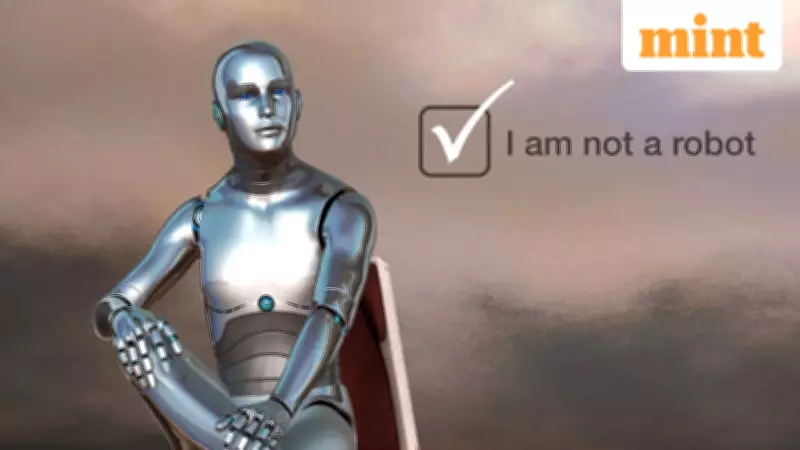
The Rise of Proof-of-Personhood in an AI-Dominated Digital World
We find ourselves navigating the complex landscape of the internet's third decade, where a profound identity crisis has emerged. For years, digital security concerns centered around anonymity, privacy protection, and password strength. Today, however, we face a more fundamental dilemma: determining whether the entities we interact with online are genuine human beings or sophisticated artificial intelligence systems.
The Erosion of Digital Trust
Generative AI technologies have reached unprecedented levels of sophistication, enabling machines to write compelling posts, engage in political debates, simulate emotional connections, manage investments, voice complaints, and execute scams with disturbing fluency. Digital avatars now exhibit eerily human characteristics, blurring the lines between organic and synthetic interactions.
The consequence is an online environment where trust is rapidly evaporating. The foundational assumption that a human being exists on the other side of digital exchanges no longer holds true, creating vulnerabilities across social, financial, and informational platforms.

Understanding Proof-of-Personhood Systems
Proof-of-personhood represents an innovative approach to restoring digital trust by providing mechanisms to distinguish humans from machines without transforming every user into a perpetually monitored data point. Unlike traditional identity verification systems that focus on credential control—such as passwords, phone numbers, or government documents—proof-of-personhood addresses a more fundamental question:
- Are you a unique, living human being?
- Are you distinct from automated scripts, AI models, or scalable synthetic identities?
This distinction carries significant weight because the economics of online manipulation relies heavily on scale. While individual humans possess natural limitations in their capacity to generate content, a single bot operator can create millions of convincing accounts with minimal effort. As artificial intelligence systems become increasingly affordable and capable, the cost of impersonating humans approaches zero while the potential damage from such deception escalates dramatically.
The Technical Framework: Biometrics and Cryptography
One prominent family of proof-of-personhood solutions incorporates biometric verification, liveness detection, and advanced cryptographic techniques. The underlying principle is straightforward yet nuanced in implementation: users demonstrate their humanity by presenting biometric signals that prove exceptionally difficult to replicate at scale, while cryptographic methods ensure minimal data exposure beyond confirming human origin.
Zero-knowledge proofs play a particularly crucial role in this ecosystem. These cryptographic protocols enable users to validate their personhood without disclosing personal identifiers such as names, facial features, addresses, or browsing histories. In theory, this allows individuals to assert their human status online without surrendering their privacy to data brokers or surveillance systems.
Transforming Social Media and Financial Services
The implications for social media platforms are substantial. Current platform models inadvertently incentivize deception, where fake accounts artificially inflate metrics, amplify divisive content, and manipulate recommendation algorithms because systems struggle to differentiate between genuine users and coordinated bot networks. Implementing proof-of-personhood could fundamentally reshape these incentive structures, making influence dependent on authentic human persuasion rather than automated amplification.
Financial services stand to benefit even more concretely from these developments. Banks, insurance providers, and fintech companies invest enormous resources in identity verification, fraud prevention, and regulatory compliance, yet synthetic identity fraud continues to expand. These sophisticated attacks typically combine fragments of authentic and fabricated data to create identities that appear legitimate to automated systems but correspond to no actual human being.

Proof-of-personhood directly addresses this vulnerability by requiring accounts to be anchored to verifiable human beings. For financial institutions, this reduces credit risk and operational costs. For consumers, it diminishes the likelihood that their personal data will be exploited to create phantom identities that damage credit profiles without corresponding to living individuals.
Implementation Challenges and Ethical Considerations
As digital financial activities expand and programmable currencies gain mainstream adoption, the necessity for reliable human verification intensifies. Many emerging systems depend on principles like "one person, one vote" or equitable access to limited opportunities—concepts that collapse under automated manipulation without robust proof-of-personhood mechanisms.
However, legitimate concerns accompany these technological developments. Any system incorporating biometric data raises valid fears about surveillance overreach and potential exclusion. Critics rightly question:
- Who controls these verification systems?
- How are errors corrected?
- What happens to individuals who cannot or choose not to participate?
These represent core design challenges that must be addressed thoughtfully. A proof-of-personhood system that compromises privacy or creates digital marginalization would solve one problem while generating several more severe issues. The ultimate challenge involves designing voluntary, transparent systems resistant to abuse by both corporate entities and governmental authorities.
The Gradual Integration into Digital Infrastructure
Proof-of-personhood is unlikely to emerge as a single revolutionary invention. Instead, it will probably develop as an infrastructural layer that gradually permeates our online experiences. Initial implementations will likely be optional, progressing to recommended status, and eventually becoming assumed components of digital interactions. If successfully implemented, most users will scarcely notice these systems—a testament to their seamless integration.
In a world where machines can communicate endlessly, debate tirelessly, and impersonate convincingly, proving one's humanity may become the most valuable digital credential available. While this might seem paradoxical, it reflects the strange reality of today's internet landscape, where distinguishing human from machine has become both essential and extraordinarily complex.