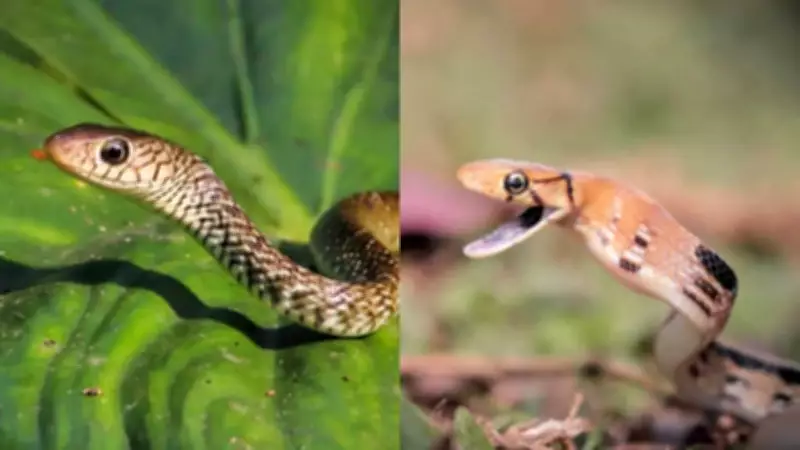
Many individuals find it challenging to differentiate between rat snakes and copperheads, as these reptiles can appear quite similar, especially from a distance in environments such as forests, farms, or residential areas. Wildlife specialists emphasize the importance of knowing the distinction because rat snakes are non-venomous, while copperheads are venomous pit vipers, making them dangerous. Although all snake identification should be conducted from a safe distance, several physical and behavioral traits can help tell them apart. Experts warn against approaching or handling snakes directly, regardless of appearance.
Copperheads Have an Hourglass Pattern
The copperhead snake is renowned for its distinctive dark hourglass-like markings along its body. These bands are typically brown or reddish and appear wider on the sides and narrower across the back. In contrast, rat snakes lack hourglass patterns; instead, they display blotches or other irregular markings. Wildlife specialists note that the banding pattern is a reliable characteristic for identifying copperheads without needing to get close.
Rat Snakes Have a Slender Appearance
Compared to copperheads, rat snakes are longer, more slender, and thinner. Copperheads are stocky and bulky. Rat snakes can grow quite long and have an elongated body shape. However, experts caution that body shape alone is not definitive and should be considered alongside other features.

Different Snakes Have Different-Shaped Heads
Copperheads typically have broad, triangular heads, whereas rat snakes have narrow, elongated heads. Nevertheless, wildlife specialists warn that frightened non-venomous snakes can flatten their heads to mimic venomous species. Therefore, it is strongly recommended to avoid approaching any snake to examine its head.
Snakes Exhibit Different Behavior Around People
Rat snakes tend to be calmer and often flee quickly from potential threats. Copperheads, however, are more likely to remain motionless and rely on camouflage for survival. This behavior can increase accidental encounters, as a copperhead may be easily overlooked among leaves, stones, or soil. Regardless, all snakes should be treated with respect and observed from a safe distance.
Copperheads Have Heat-Sensing Pits
A key scientific difference is the presence of heat-sensing pits located above each nostril in copperheads. These pits help them locate warm-blooded prey, even at night. Rat snakes lack this feature. However, people should never examine these pits up close in the wild, as copperheads can bite readily.
Rat Snakes Are Agile Climbers
Rat snakes are excellent tree climbers and are often found on branches, barn roofs, attics, fences, and other elevated spots where they hunt mice and birds. Copperheads are more terrestrial, typically lying motionless among leaves, stones, logs, and grass. Observing a snake climbing can indicate it is a rat snake, though both species may be seen near homes, especially during hot seasons.
Venom Makes All the Difference
The most significant difference is that copperheads are venomous, while rat snakes are harmless and non-venomous. Copperhead bites require medical attention, though fatalities are rare if treated promptly. Experts note that rat snakes are beneficial for controlling rodent populations in rural areas. Nonetheless, one should never attempt to touch or capture any snake, as it could be dangerous.
Disclaimer: This article is for general informational purposes only. Snake appearance and behavior can vary based on age, location, and other factors. Individuals should never handle or attempt to identify snakes up close and should contact wildlife rescuers if a snake is spotted.