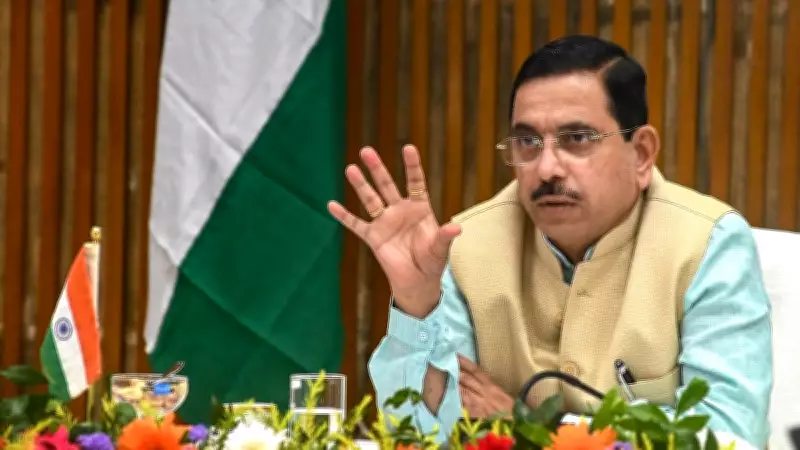
Union Minister Pralhad Joshi announced that nearly one-third of India's record 256 GW peak power demand was met by renewable energy sources. This milestone underscores the significant contribution of renewables to the national grid.
Record Peak Demand
India achieved a historic peak power demand of 256 gigawatts (GW) recently, driven by increased economic activity and weather conditions. The previous record was 250 GW, set earlier this year.
Renewables' Contribution
According to Joshi, renewables accounted for approximately 80 GW of the peak demand, marking a substantial share. This includes solar, wind, hydropower, and other clean energy sources. The minister emphasized that this achievement reflects the government's successful policies promoting renewable energy.

The share of renewables in meeting peak demand has been rising steadily. In 2023, renewables contributed around 25% during peak hours, now increasing to nearly one-third. This growth is attributed to capacity additions and improved grid management.
Government Initiatives
The government has set ambitious targets for renewable energy, aiming for 500 GW of non-fossil fuel capacity by 2030. Schemes like the Production Linked Incentive (PLI) for solar manufacturing and green energy corridors have boosted capacity.
Joshi highlighted that India's renewable energy capacity has grown significantly, from 76 GW in 2014 to over 180 GW currently. This includes 70 GW of solar and 45 GW of wind power. The minister also noted that India is on track to meet its Nationally Determined Contributions (NDCs) under the Paris Agreement.
Challenges and Future Outlook
Despite the progress, challenges remain, including grid stability and storage integration. The government is promoting pumped storage projects and battery energy storage systems to address intermittency of renewables.
Joshi stressed the need for continued investment in renewable infrastructure and technology. He called for collaboration between states and the central government to ensure reliable and affordable power for all.
The achievement of meeting one-third of peak demand with renewables is a significant step towards India's clean energy transition. It demonstrates the potential of renewables to support the country's growing energy needs while reducing carbon emissions.