For years, cancer treatment has relied on three main pillars: surgery, chemotherapy, and immunotherapy. While these approaches have helped millions, patients whose cancers spread or stop responding often face limited options. Now, a groundbreaking injectable drug is generating excitement among oncologists. In a recent international trial, the drug completely eliminated tumors in some patients whose cancers had resisted both chemotherapy and immunotherapy. Researchers describe the results as unprecedented, potentially transforming the outlook for those battling the most aggressive cancers.
The Amivantamab Breakthrough
The drug, known as amivantamab, demonstrated remarkable efficacy in patients with advanced head and neck cancers that had spread or recurred despite standard treatments. In the trial, dozens of patients experienced tumor shrinkage, and for 15 individuals, scans showed no trace of cancer. These findings, presented at the 2026 American Society of Clinical Oncology (ASCO) meeting, represent a significant leap forward in a field often characterized by incremental progress.
Study Details and Results
As reported by The Guardian, the study enrolled 102 patients from 11 countries, all of whom had exhausted conventional treatment options. After receiving amivantamab, tumors shrank or disappeared in 43 patients. Among them, 28 had substantial shrinkage, and 15 achieved complete remission. Professor Kevin Harrington, a leading cancer specialist at the Institute of Cancer Research in London and consultant oncologist at The Royal Marsden NHS Foundation Trust, emphasized the significance: "These are unprecedentedly strong responses in patients whose disease has become resistant to both chemotherapy and immunotherapy. This is a group of patients for whom treatment options are extremely limited, so seeing this level of benefit is very striking."

How Amivantamab Differs from Chemotherapy
Traditional chemotherapy indiscriminately attacks rapidly dividing cells, harming healthy tissues alongside cancerous ones. Amivantamab employs a more targeted strategy. It works on three fronts: blocking EGFR, a protein that drives tumor growth; inhibiting the MET pathway, an alternative route cancers use to evade treatment; and mobilizing the immune system to identify and destroy cancer cells. By attacking cancer from multiple angles simultaneously, the drug makes it harder for tumors to develop resistance.
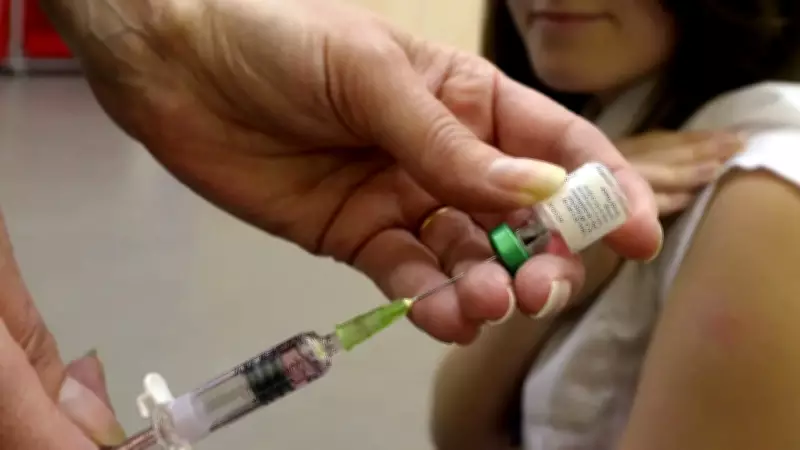
Professor Harrington noted, "This treatment has the potential to benefit many thousands of patients each year." Additionally, the drug offers convenience: most cancer therapies require hours of intravenous infusion, but amivantamab is administered as a simple injection under the skin every three weeks. This reduces treatment burden for patients and healthcare facilities alike.
Patient Experiences
Beyond the statistics, patient stories illustrate the drug's impact. Carl Walsh, a 56-year-old from Birmingham, was diagnosed with tongue cancer in May 2024. After chemotherapy and immunotherapy failed, he joined the OrigAMI-4 trial at the Royal Marsden in July 2025. "I was initially treated with both chemotherapy and immunotherapy, which unfortunately were not successful," he said. "At that point, I was recommended for the OrigAMI-4 trial. I'm now on my 17th cycle of treatment, and I'm very pleased with the progress so far."
Before the trial, Walsh struggled to speak and eat due to swelling and pain. After starting the injections, his symptoms improved dramatically. "I now feel able to live a normal life. Before starting the trial, I struggled to speak properly and found eating difficult because of the swelling and pain," he shared. "When things were at their worst, I was eating soup, rice pudding, tins of ravioli and spaghetti, and many, many omelettes, all augmented by three prescribed nutritional milk drinks a day. I lost quite a bit of weight. After only two cycles of the treatment, my diet started to return to normal, and I was eating a full diet after six months. The thing I enjoyed most was the first big steak. My speech is completely back to normal, and at work I speak regularly on headsets without problems."

Important Considerations
It is crucial to note that this trial focused on particularly aggressive head and neck cancers not linked to HPV, which tend to be more resistant to treatment. The positive responses in this subgroup make the results even more meaningful. In terms of survival, patients receiving amivantamab lived a median of 12.5 months after starting treatment. While this may not seem extraordinary, for this patient population, even that duration is a significant achievement, as survival rates are typically very poor.
Future Potential
Despite its promise, amivantamab is not yet a magic bullet or a cure. The drug remains under investigation, and larger trials are needed to assess its long-term efficacy, safety, and applicability to other cancer types. However, its potential extends beyond head and neck cancers. Amivantamab is already approved for certain lung cancers and is being tested in approximately 60 trials worldwide, including for colon, stomach, and brain cancers.
Scientists see this as part of a broader trend toward targeted injections and cancer vaccines that train or boost the immune system, moving away from broadly toxic therapies. Instead of irradiating the entire body, the focus is on smarter, more personalized treatment. While cancer research has seen many "breakthroughs" that later fizzled, most experts agree that these results are hard to ignore. For patients running out of options, a single injection that can shrink or eliminate tumors offers something rare: genuine hope.