The upcoming initial public offerings of SpaceX and OpenAI, expected in June and September 2025 respectively, are generating immense excitement in financial markets. These two companies, one focused on space exploration and the other on artificial intelligence, are poised to become the biggest technology spectacles since the dotcom boom. Early investors, including two Indian-origin venture capitalists, stand to reap extraordinary returns.
Vinod Khosla's OpenAI Bet
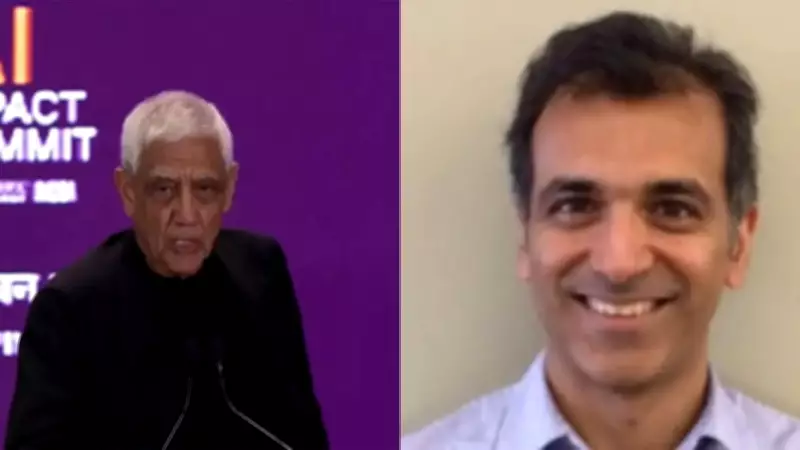
Veteran venture capitalist Vinod Khosla, founder of Khosla Ventures, made a $50 million investment in OpenAI in 2019 after Sam Altman approached him following Elon Musk's withdrawal from initial funding commitments. Khosla later described it as the riskiest bet of his career, even apologizing to his own investors. That gamble is now close to a massive payoff. If OpenAI lists at a valuation between $850 billion and $1 trillion, Khosla's stake could be worth around $1.5 billion, a 30-fold return on investment.
Infosys's Missed Opportunity
Infosys was among the original co-founding supporters of OpenAI when it launched as a non-profit in December 2015, contributing $3 million as a philanthropic donation. Former CEO Vishal Sikka reportedly pushed for a larger strategic investment of up to $1 billion, but conservative board members blocked the move. Had Infosys invested, its stake today could be worth roughly $45 billion, nearly 90 percent of its current market capitalization.

Anand Desai's SpaceX Investment
Anand Desai's New York-based hedge fund, Darsana Capital Partners, bet on SpaceX in 2019 when the company was valued at $30-33 billion. At that time, Musk's Mars colonization plans seemed far-fetched. Today, SpaceX is targeting a valuation between $1.5 trillion and $1.75 trillion for its IPO. According to The Wall Street Journal, nearly 60 percent of Darsana's assets are tied to SpaceX shares, and the fund's stake could now be worth more than $10 billion.
The Musk-Altman Rivalry
The looming IPOs are set against a backdrop of intense rivalry between Elon Musk and Sam Altman. Musk co-founded OpenAI with Altman in 2015 but left due to disagreements over control and direction. Khosla has alleged that Musk wanted OpenAI to become his private fiefdom. Since then, the two have traded public barbs while racing to dominate AI. Musk warns that AI could destroy civilization, even as he builds his own AI company, xAI. Investors seem unfazed by the drama, focusing instead on the potential of these companies to reshape the future.
Trillion-Dollar Fantasies
Both companies now occupy a rare zone in finance where narrative and hype matter more than conventional accounting. The IPOs are seen not just as corporate listings but as civilizational milestones. One company promises to replace much of human labor, the other to take humans to space. Whether they can justify trillion-dollar valuations remains uncertain, but for early believers like Desai and Khosla, the returns are already astronomical. In Silicon Valley, prophets are not always right, but the earliest believers usually become spectacularly rich.