Stargate AI Project Stalls: $500 Billion Venture Faces Delays and Disputes
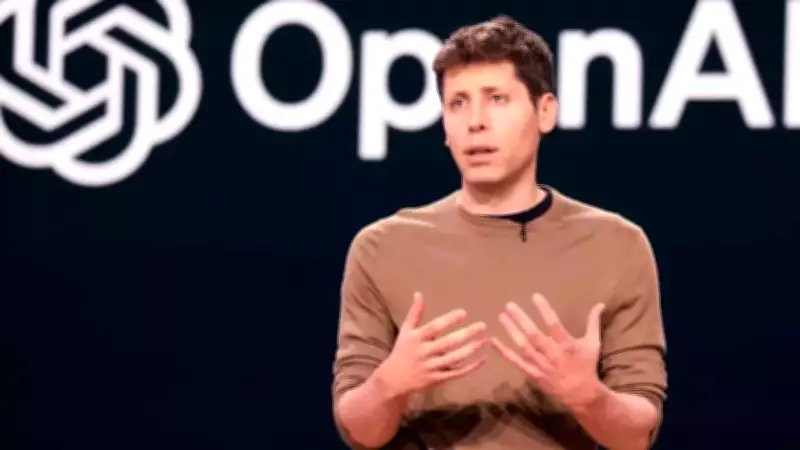
On January 22, 2025, a high-profile announcement at the White House saw Sam Altman of OpenAI, Masayoshi Son of SoftBank, and Larry Ellison of Oracle stand alongside President Donald Trump to unveil Stargate—a monumental $500 billion artificial intelligence data center initiative. This ambitious project was touted as the largest AI infrastructure endeavor in history, aiming to deliver 10 gigawatts of computing capacity and commit $100 billion in immediate spending to secure America's lead over China in the AI race.
However, within hours, Elon Musk cast doubt on the venture, posting on X that the partners lacked secured funding, specifically noting SoftBank had "well under $10 billion." Altman quickly countered, inviting Musk to visit an active site and suggesting that Musk's new role should prioritize national interests over corporate ones.
Thirteen Months Later: A Project in Disarray
Fast forward thirteen months, and Altman's confidence appears misplaced. According to a report by The Information, the Stargate joint venture has not staffed up, lacks dedicated leadership, and has failed to break ground on any data centers. The partners have been deadlocked for months over fundamental issues, including construction responsibilities, site ownership, and financial flows.

Between September and October 2025, OpenAI executives made multiple trips to Tokyo to negotiate with SoftBank's Masayoshi Son, but progress was minimal, reportedly fueled by 7-Eleven snacks and unresolved disagreements. The core structural dispute centered on ownership: both OpenAI and SoftBank insisted on building and owning the flagship Texas campus, leading to a standoff that cost OpenAI its general contractor and months of construction time.
OpenAI's Struggles and Financial Fallout
Frustrated by the impasse, OpenAI explored going solo, scouting sites across the US and attempting to raise billions in debt for independent data center campuses. However, lenders rejected the proposal, unwilling to fund a company burning billions annually with no clear path to profitability before 2029. As a result, OpenAI missed its 2025 target of 10 gigawatts, achieving only about 7.5 gigawatts, and its projected compute spending through 2030 surged from $450 billion to $665 billion.
To bridge the gap, OpenAI resorted to purchasing expensive last-minute compute from AWS and Google Cloud—competitors it had aimed to become independent from through Stargate.
Oracle's $300 Billion Bet Takes a Hit
Oracle, which signed a $300 billion, five-year cloud computing contract with OpenAI in September 2025, has suffered significant financial repercussions. The company's stock has roughly halved from its September peak, erasing over $400 billion in market capitalization, while its debt has exceeded $100 billion. S&P Global has placed Oracle on negative watch for a potential downgrade, and credit default swap costs have spiked, indicating heightened default risk.
Investment bank TD Cowen reported that Oracle may cut 20,000 to 30,000 employees to free up $8–10 billion in cash flow, needed for infrastructure requiring an estimated $156 billion in capital spending and around 3 million GPUs. The company plans to raise $50 billion in new debt and equity this year and is considering selling Cerner, its healthcare software unit acquired for $28.3 billion in 2022.
Despite Oracle's attempts to reassure markets with posts on X expressing confidence in OpenAI, the stock has continued to decline, with one venture capitalist labeling the messaging as "literally bank-run language."
SoftBank Doubles Down Amid Uncertainty
SoftBank, meanwhile, is increasing its stakes despite the stalled deal. The Japanese conglomerate already holds an 11% stake in OpenAI after a $22.5 billion investment in December and is in talks to inject another $30 billion. Its Vision Funds posted a ¥735 billion quarterly profit, and its stock nearly doubled in 2025. However, SoftBank's Stargate obligations remain entangled, and it is reportedly exploring 90% debt financing to meet commitments.

Complications arose when Nvidia retracted what was described as a $100 billion investment in OpenAI, with CEO Jensen Huang confirming the September agreement was non-binding and never finalized. This setback affects not only OpenAI's fundraising but also Oracle, which booked the full $300 billion contract in its remaining performance obligations, contingent on OpenAI's ability to raise capital at rising valuations.
Musk's Response and Broader Implications
When The Information's report detailed Stargate's stagnation last week, Elon Musk resurfaced on X with a succinct response: "Hardware is hard." He elaborated, noting that those attempting such scale would understand the challenges. This served as both a victory lap and a genuine observation, highlighting the gap between announcing infrastructure and actually building it.
The original Stargate announcement promised unprecedented speed, scale, and immediate spending, but it has delivered a governance mess, stalled construction, and a stark reminder of the difficulties in executing large-scale AI projects. As the venture remains in limbo, its impact on the AI race and the financial health of its partners continues to unfold.