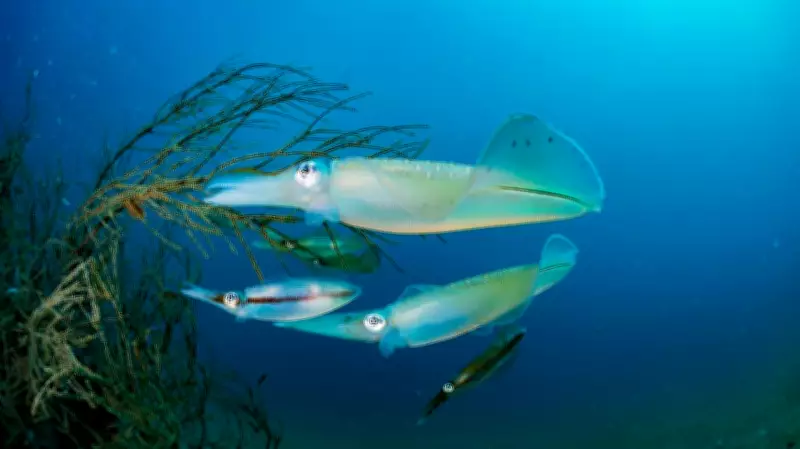
A groundbreaking study on the Indian squid has unveiled a surprisingly complex love life, including intricate mating behaviors and instances of same-sex pairing. The research, conducted by Dr Geetha Sasikumar and Dr K K Sajikumar of the Shell Fish Fisheries Division, examined squid samples collected from the Arabian Sea off the coast of Kochi.
Unprecedented Findings in Squid Behavior
The study, published recently, provides new insights into the reproductive strategies of the Indian squid (Uroteuthis duvaucelii). Researchers observed a range of mating behaviors that were previously undocumented in this species. Among the most striking discoveries was the occurrence of same-sex pairing, where male squids were observed engaging in mating-like interactions with other males.
According to the scientists, these behaviors challenge long-held assumptions about squid reproduction. The findings suggest that the mating system of the Indian squid is far more flexible and complex than previously thought. The study highlights the importance of understanding the full spectrum of behavioral diversity in marine species.

Methodology and Observations
The research team collected squid samples from the Arabian Sea near Kochi over several months. They carefully documented mating interactions in controlled laboratory settings as well as in natural habitats. Using high-resolution video recordings, the scientists were able to capture detailed behavioral sequences.
- Male squids were observed competing for access to females through elaborate displays and physical contests.
- Same-sex pairing involved behaviors such as mounting and sperm transfer attempts, though no successful fertilization occurred.
- Females were seen to mate with multiple males, suggesting a strategy to increase genetic diversity in offspring.
Implications for Marine Biology
These findings have significant implications for the study of cephalopod behavior and evolution. The Indian squid is an important species both ecologically and commercially. Understanding its reproductive biology can aid in fisheries management and conservation efforts.
Dr Sasikumar noted that the discovery of same-sex pairing in squids adds to the growing evidence that homosexual behavior is widespread across the animal kingdom. It may serve various functions, such as social bonding, practice for mating, or reducing aggression among males.
The study also opens up new questions about the genetic and environmental factors that influence mating preferences in squids. Further research is needed to explore the underlying mechanisms and evolutionary drivers of these behaviors.
This research was conducted as part of ongoing efforts to document the biodiversity and behavioral ecology of marine species in Indian waters. The team plans to extend their studies to other squid species to determine if similar patterns exist.