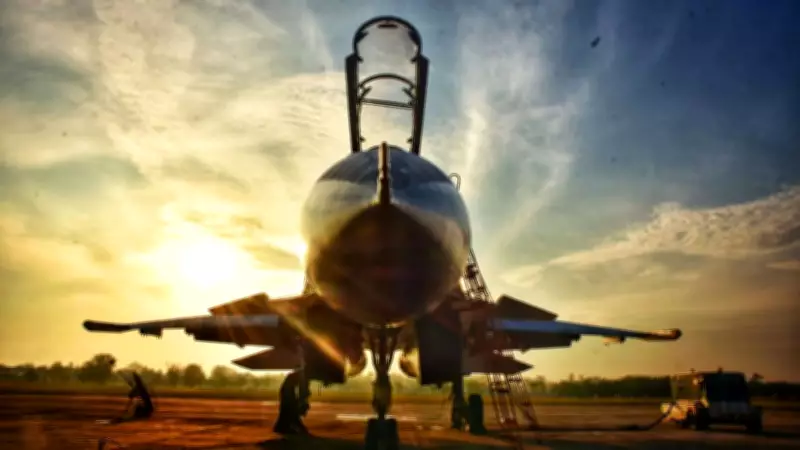
The Indian Air Force (IAF) is undergoing a significant transformation, replacing older aircraft types with the Rafale, Tejas Mk-1A, and soon the Tejas Mk-2 and Advanced Medium Combat Aircraft (AMCA). However, the Sukhoi-30MKI will continue to serve as a bridge during this transition.
Comprehensive Refresh for the Sukhoi-30MKI
First inducted in the early 2000s, the Sukhoi-30MKI is now slated for a comprehensive refresh under the Super Sukhoi programme. Estimated at around Rs 63,000 crore, the programme will cover roughly 180 of the IAF's 260 Sukhoi aircraft, making it one of the largest fighter modernisation efforts in the world.
Focus on Avionics and Sensors
The upgrade package focuses on avionics, sensors, and mission systems. At its core is the indigenous Virupaksha AESA radar, which offers extended detection ranges, improved resistance to electronic attack, and simultaneous multi-target tracking. Complementary systems include advanced electronic warfare suites, AI-enabled mission computers, and sensor fusion frameworks that combine radar, infrared, and electronic intelligence inputs into a unified tactical picture. This approach is increasingly seen as essential for fifth-generation performance.

Navigation and Datalinks
Navigation and datalinks receive major attention. Multi-constellation navigation antennas compatible with NaVIC, GPS, GLONASS, BeiDou, Galileo, and GAGAN are being procured; the RFP for this element was recently issued. These antennas are specified to operate at altitudes up to 21 km, speeds up to Mach 1.5, and sustained accelerations between -2g and +9g, supporting precision strike profiles and robust network-centric operations.
Next-Generation Weapons and Structural Enhancements
On the weapons side, the Super Sukhoi will be cleared to employ next-generation air-to-air and air-to-surface munitions, including long-range standoff weapons and indigenous systems such as the Astra family. Structural reinforcements will permit heavier payloads where required. Maintenance and availability are set to improve through digital twin technologies and predictive servicing, which will streamline logistics and increase sortie rates.