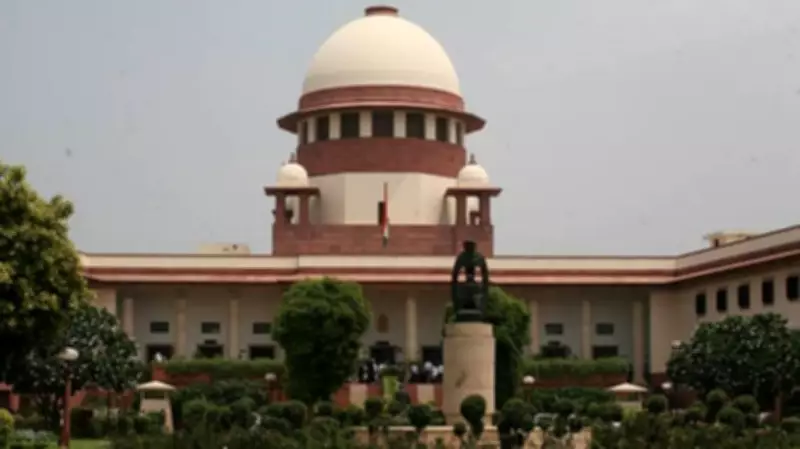
The Supreme Court of India has released draft guidelines on the use of artificial intelligence in the judiciary, explicitly barring its application in core judicial decision-making. The draft regulations, prepared by the Supreme Court's Artificial Intelligence Committee, permit AI usage only in administrative and supportive functions.
Scope of AI in Courts
The guidelines aim to harness the benefits of AI while safeguarding judicial independence and human oversight. AI tools may be employed for tasks such as case management, document review, translation, and legal research. However, any decision that involves judicial discretion, interpretation of law, or adjudication of rights must remain solely with human judges.
Key Provisions
- Prohibition on Core Decisions: AI cannot be used to determine guilt, liability, or sentencing. It must not replace the judge's reasoning or judgment.
- Transparency and Accountability: Any AI-assisted process must be transparent, with clear records of how the tool was used and what outputs it generated.
- Data Privacy: AI systems must comply with data protection laws, ensuring that sensitive case data is not misused or exposed.
- Human Oversight: All AI outputs must be reviewed by a human judge or court official before any action is taken.
Reactions and Implications
Legal experts have welcomed the cautious approach. Senior advocate Meenakshi Arora called it a "balanced framework" that acknowledges AI's potential while protecting judicial integrity. The Bar Council of India noted that the guidelines align with global trends where AI is used as a tool, not a decision-maker.

The draft is open for public comments for 30 days. After incorporating feedback, the Supreme Court will finalize the regulations, which will apply to all Indian courts. The move is part of a broader push for digital transformation in the judiciary, including e-courts and virtual hearings.
Future of AI in Indian Judiciary
The committee emphasized that AI should augment, not replace, human judgment. It recommended periodic audits of AI systems and continuous training for judges and staff. The guidelines also call for a national AI policy for courts to ensure uniformity and ethical standards.
As AI evolves, the Supreme Court plans to review these guidelines every two years. This proactive stance aims to keep pace with technological advancements while upholding the rule of law.