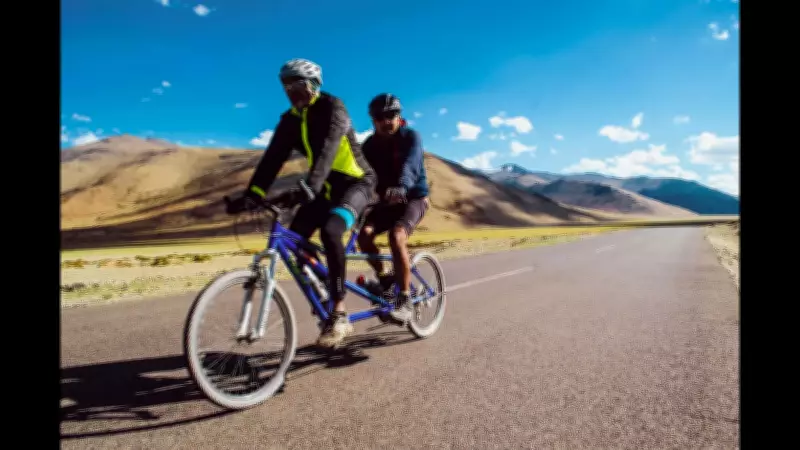
Every Saturday morning, about 30 cyclists take to the streets of Pune for their weekly ride, but they do so on 15 cycles. Tandem cycling, something you either saw in movies or in those Euro Trip pictures of your relatives, has found a new home in the heart of cyclists. These weekly rides, arranged by Adventures Beyond Barriers Foundation (ABBF), stand as a testament to the rising popularity of tandem cycling. It is slowly becoming popular among endurance riders, adventurers, and cycling communities around the country, with about 3,500 to 4,000 tandem bicycles currently in use across India.
Trust and Teamwork in Focus
“What appears to be a simple task is actually an exercise in communication, cooperation, endurance, and trust,” says Divyanshu Ganatra, founder of ABBF. Riders, both seasoned and beginners, are discovering this as they ride with a partner. Saurabh Chaugule, who has been tandem cycling since 2022 and completed a 295-kilometer ride from Pune to Trimbakeshwar, shares, “While riding with a partner, you build friendships naturally. The captain eventually becomes more than just a riding partner. You stay in touch, meet outside rides, and form connections that continue even after the cycling is over.” He adds that the sport gives him a sense of freedom. “As a visually impaired person, that feeling is very special,” he says. Fellow volunteer captain Bharat Gopalakrishnan notes that one of the biggest lessons the sport teaches is trust. “When two people ride together, they have to work as a team. This creates a bond you don’t often find in other sports,” he explains.
An Inclusive Cycling Community
While tandem cycling is gaining popularity among recreational and endurance riders, it has also become a powerful tool for inclusion. Through the captain-stoker model, visually impaired and differently-abled individuals can participate in everything from weekend rides to multi-day expeditions. “Tandem cycling is really a tool for inclusion. It improves physical health, but more importantly, it helps people become more confident and gives them a chance to socialize,” says Ganatra. For many, tandem cycling helps fulfill a dream that visually impaired people often assume is impossible. “This helped turn my dream of cycling into reality,” says More. Rest assured, tandem cycling is steadily moving past novelty status and into the mainstream, demonstrating that the best rides are occasionally enjoyed with others.

Communication is Key
For a lot of riders, part of the appeal lies in the fact that tandem cycling turns what is usually a solo activity into a shared one. “It takes time for a captain and stoker to find their rhythm. At first, there’s a lot of communication, but eventually it becomes intuitive. Once that sync develops, tandem cycling becomes extremely enjoyable,” says volunteer captain Aniket Mahashabde. That communication becomes especially important during steep climbs, descents, and gear changes. “Communication is everything on a tandem bicycle. Whether there’s a climb, a descent, a speed breaker, or a gear change, both riders need to know what’s happening,” says Chandrakant More, a visually impaired rider. From weekend rides in Pune to high-altitude expeditions in Ladakh, tandem cyclists are proving that some adventures are better experienced together. Trust, teamwork, and two sets of legs—tandem cycling is turning a traditionally solo sport into a shared experience, one ride at a time.