The year 2025 has witnessed a seismic shift in how the world's largest technology companies are being run. As the competition in artificial intelligence reaches a fever pitch, the chief executives of Google, Microsoft, Meta, and other giants have abandoned traditional corporate playbooks. They have instead embraced a radical, hands-on style of leadership that Silicon Valley insiders call 'Founder Mode'.
What is 'Founder Mode' in the AI Era?
This intense operational style sees CEOs diving deep into the trenches, from personally inspecting factory production lines to writing critical code. The high stakes of the global AI race have made this micromanagement essential for survival and dominance. Here is how five of the most powerful tech leaders are personally architecting their companies' futures.
Sergey Brin's Full-Time Return to Google's AI Frontlines
Google co-founder Sergey Brin returned to a 'full-time' role at the company following an internal 'Code Red' situation over AI. Brin is now spearheading Google's aggressive AI offensive. He has been instrumental in the development of Antigravity, Google's newly-unveiled agent-first coding platform. Brin even starred in the launch video alongside engineers from Windsurf, a company Google acquired for a staggering $2.4 billion. Reports confirm Brin is in the office nearly every day, deeply involved in the training of the core Gemini AI models.

Satya Nadella's Urgent Microsoft Restructuring
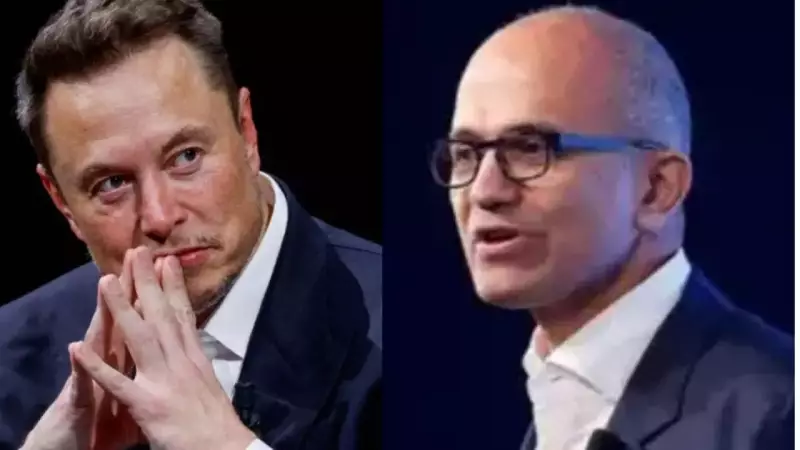
Even though he is not a founder, Microsoft's Satya Nadella is operating in pure 'Founder Mode,' according to Microsoft's Deputy CTO Dee Templeton. In 2025, Nadella has taken dramatic steps to make Microsoft more agile. He has flattened the company's hierarchy and overhauled its senior leadership. A key move was hiring top talent like Meta's Jay Parikh to create a direct reporting line to his office. This urgent restructuring, detailed in a Financial Times report, is aimed at helping Microsoft better compete with rivals Amazon and Google in cloud and AI infrastructure.
Elon Musk's Hands-On Chip Partnership
Tesla and Samsung announced a crucial chip partnership earlier in 2025. Never one to delegate from afar, Tesla CEO Elon Musk pledged to 'walk the line personally' at Samsung's new semiconductor facility in Texas to accelerate progress. Furthermore, Musk secured a unique agreement allowing Tesla engineers to assist Samsung in maximizing manufacturing efficiency. This ensures Tesla's ambitious hardware development timeline stays ahead of the entire automotive and robotics industry.
Mark Zuckerberg's Bet on Small, Elite Teams
At Meta, CEO Mark Zuckerberg is pivoting the social media behemoth into 'startup mode.' He has created a multi-billion dollar 'Superintelligence' team and is concentrating power and resources into small, elite, talent-dense units. Zuckerberg firmly believes that these small teams are the optimal configuration for achieving breakthrough frontier research and winning the ongoing AI arms race.
Brian Chesky's 'Skip-Level' Management at Airbnb
Airbnb CEO Brian Chesky publicly rejects conventional leadership advice. He manages his $79 billion company like a startup, personally making critical 'hire, fire, promote, and manage' decisions for employees several levels below his direct reports. Chesky argues that 'skip-leveling'—communicating directly with the people who report to his management team—is the only genuine way to maintain a connection with the employees who are actually doing the core work.
The Bottom Line: A New Era of Leadership
The intense pressure of the 2025 AI race has fundamentally changed corporate governance in tech. The return to 'Founder Mode' signifies a move away from bureaucratic layers towards speed, direct oversight, and deep technical involvement from the very top. This hands-on approach by CEOs like Brin, Nadella, Musk, Zuckerberg, and Chesky underscores that in the battle for AI supremacy, leadership is no longer just about strategy—it's about rolling up your sleeves and building the future, line of code by line of code.