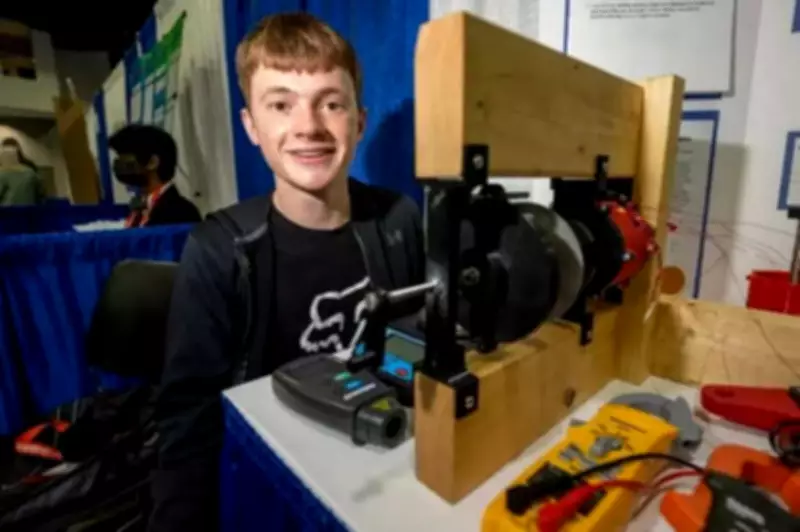
A teenager's garage-built motor model has garnered significant attention beyond science competitions, as it tackles a major technical hurdle in the electric vehicle (EV) industry: dependence on rare-earth magnets. Robert Sansone, a 17-year-old from Florida, constructed a motor prototype designed to eliminate rare-earth magnets from EV motors. His invention is not a breakthrough in technology but rather an application of a well-known motor type, the synchronous reluctance motor, which has long been studied as a potential replacement for traditional magnet-heavy motors.
Why Rare-Earth Magnets Matter in EVs
According to the U.S. Department of Energy (DOE), most traction motors in electric and hybrid vehicles use rare-earth permanent magnets due to their high efficiency and performance. However, the DOE also highlights that reliance on rare-earth minerals poses supply chain challenges. These minerals are considered critical resources for various energy technologies, including transportation. Concerns over supply reliability have spurred interest in domestic recovery and alternative supply chains. A 2023 review in Materials (available via PubMed) notes that neodymium-iron-boron magnets are widely used in traction motors for their high magnetic energy density.
A Project Built on Existing Engineering
What makes Sansone's achievement notable is his use of an existing motor architecture rather than an entirely experimental concept. Synchronous reluctance motors are among the potential candidates for EVs, alongside induction and switched reluctance motors. This places his work within a broader engineering discussion. Unlike claims of reinventing electric engines, Sansone's prototype aims to improve a motor technology that could reduce dependence on rare-earth materials. Avoiding or minimizing rare-earth magnets can help mitigate supply instability and cost fluctuations, though alternative motors still face issues with efficiency, power density, and durability.

More Than a Science Fair Story
This story resonates because it combines human interest with a genuine engineering challenge. While not the first teen invention to gain attention, Sansone's work stands out as it addresses a real, unresolved problem: reducing reliance on strategically valuable materials in EVs without compromising performance. After years of government, scientific, and manufacturing efforts, no reliable substitute has been found. Sansone's prototype does not claim to have solved the issue, but it highlights why permanent magnet motors are chosen and how difficult it is to develop effective alternatives. The fact that innovation can emerge from anywhere, even a teenager's workshop tackling a major industry bottleneck, is truly inspiring.
About the Author
The TOI Science Desk is an inquisitive team of journalists dedicated to curating captivating science news, features, and articles for readers of The Times of India. They cover everything from genetic engineering to space exploration and artificial intelligence, making science accessible and engaging for all backgrounds.