

Tesla's AI Software VP Faces Intense Online Criticism Over Self-Driving Comments
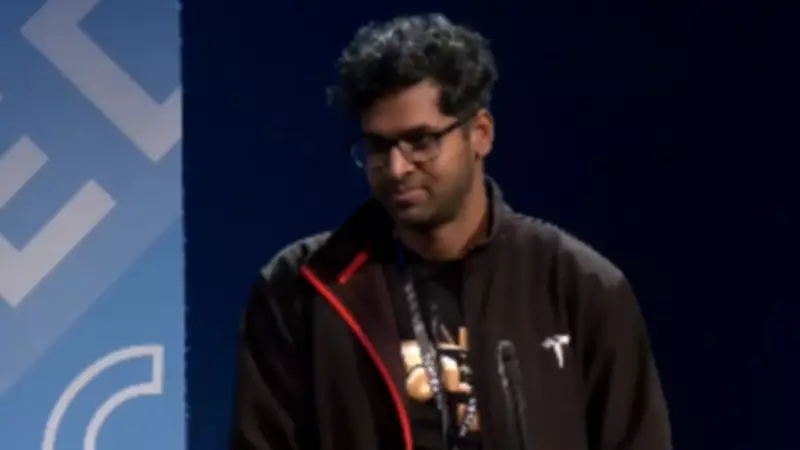
Ashok Elluswamy, Tesla's Vice President of AI Software and a pivotal architect behind the company's Autopilot and Full Self-Driving (FSD) technologies, has ignited significant online controversy following his recent statements about what he termed an "obvious" resolution to Tesla's persistent autonomous driving hurdles.
Conference Remarks Double Down on Camera-Only Philosophy
Speaking at the 2026 ScaledML Conference organized by Matroid on January 29, Elluswamy participated in a forum focused on developing end-to-end foundational models for autonomous vehicles. During the discussion, he strongly reaffirmed Tesla's commitment to its camera-exclusive strategy, explicitly rejecting the necessity for supplementary sensors like lidar.
"It's so obvious you can solve this with cameras. Why wouldn't you solve with cameras? It's 2026. The self-driving problem is not a sensor problem, it's an AI problem. The cameras have enough information already. It's a problem of extracting the information, which is an AI problem," Elluswamy asserted during his presentation.

Tesla's Long-Standing Position on Neural Networks and Safety
Tesla has consistently championed its end-to-end neural network architecture, which processes raw camera feeds and vehicle data harvested from billions of miles driven by its global fleet. The company maintains this system can surpass human driving capabilities, claiming it offers "2x safer than human drivers" performance while asserting that extensive data collection effectively addresses rare and unpredictable "long-tail" driving scenarios.
However, Elluswamy's comments emerged during a period of heightened regulatory and public examination of Tesla's self-driving technology. In October of the previous year, US federal regulators initiated another investigation into Tesla's Full Self-Driving feature following numerous reported incidents.
Regulatory Scrutiny and Safety Incidents
The National Highway Traffic Safety Administration (NHTSA) disclosed it was examining 58 specific cases where Tesla vehicles allegedly breached traffic safety laws while operating with FSD engaged. These incidents included:
- Running red lights
- Driving on the wrong side of the road
- Other serious traffic violations
These reported events reportedly resulted in more than a dozen crashes, several fires, and nearly two dozen injuries, creating a challenging backdrop for Elluswamy's optimistic assessment.
Online Community Reacts With Skepticism and Criticism
Against this context of ongoing safety investigations, Elluswamy's declaration that cameras alone suffice for full autonomy failed to resonate with many online observers. Across various social media platforms and discussion forums, critics voiced multiple concerns:
- Unfulfilled Promises: Many questioned why Tesla has yet to deliver fully unsupervised robotaxis despite making similar assurances for over a decade.
- Competitive Comparisons: Several users contrasted Tesla's approach with competitors like Waymo, which utilizes lidar technology and already operates commercial driverless services in multiple US cities.
- Hardware Evolution Questions: Some pointed to Tesla's own hardware progression, asking why newer vehicles require higher-resolution cameras if existing ones already contain all necessary information.
Specific Social Media Reactions Highlight Growing Skepticism
The online response included pointed commentary from various users:
One sarcastic comment read: "Yeah, but has Ashok checked with all of the keyboard experts on here before making such claims??"
A more direct critic stated: "What a load of bs. Vision only cannot even detect potholes. Meanwhile this isn't a problem for Waymo."
Another observer highlighted what they perceived as a recurring pattern in Tesla's communications: "Notice he said 'can solve' not 'has been solved.' It's always a 'next year' for Tesla."

This online backlash reflects growing public impatience with Tesla's autonomous driving timeline and methodology, particularly as regulatory bodies continue to investigate the company's technology following multiple safety incidents. The debate between camera-only versus multi-sensor approaches to autonomous driving appears far from settled, with Tesla's leadership facing increasing scrutiny from both regulators and the public as they pursue their vision of full self-driving capability.
