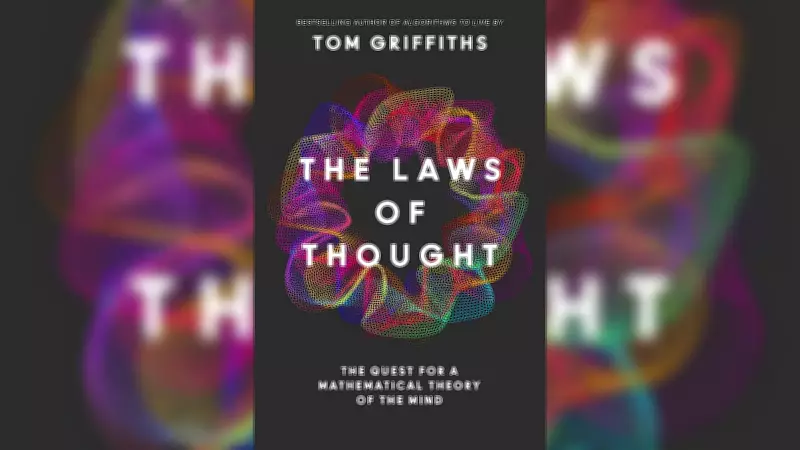
Tom Griffiths' 'The Laws of Thought' Unveils Pathways to Formalizing Human Cognition
In a groundbreaking exploration of intellectual history, Tom Griffiths' latest book, 'The Laws of Thought,' serves as this week's must-read, offering a deep dive into the methodologies that have shaped our understanding of human cognition. Published on February 14, 2026, this work stands out for its innovative approach to explaining complex ideas through engaging storytelling.
Three Pillars of Formalizing Thought
Griffiths meticulously breaks down the three major frameworks used to formalize thought, making them accessible to a broad audience. Rules and symbols represent the traditional logical systems that have underpinned philosophy and early computing, focusing on structured reasoning and symbolic representation.
Moving to more modern developments, the book explores neural networks, which mimic the brain's interconnected neurons to model learning and pattern recognition, revolutionizing fields like artificial intelligence and cognitive science.

Lastly, Griffiths delves into probability and statistics, highlighting how probabilistic models and statistical methods provide tools for dealing with uncertainty and making inferences in complex, real-world scenarios.
Human Stories Behind the Ideas
What sets this book apart is its narrative-driven approach. Griffiths introduces each conceptual framework through the compelling stories of the pioneers and thinkers who developed them. This method not only enriches the technical explanations but also humanizes the scientific journey, connecting readers to the personal struggles and breakthroughs that have driven progress in formalizing thought.
By weaving together historical anecdotes with clear explanations, 'The Laws of Thought' makes abstract concepts tangible, encouraging readers to appreciate the evolution of cognitive science and its impact on technology and philosophy.
Significance and Impact
This book is particularly relevant in today's era, where artificial intelligence and data-driven decision-making are increasingly prevalent. Griffiths' work provides a foundational understanding that bridges past theories with current applications, making it an essential read for students, professionals, and anyone curious about the mechanics of human thought.
As a featured read from February 15 to February 21, 2026, it underscores the ongoing quest to decode cognition, offering insights that are both timeless and timely in the fast-paced world of technological innovation.