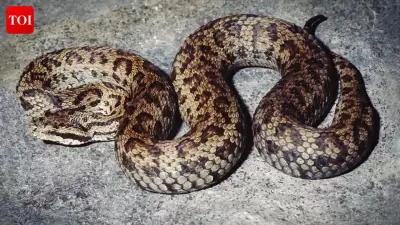
Snakes are both fascinating and fearsome creatures. Revered in many cultures and mythologies, they often evoke a mix of awe and dread. A newly discovered snake species in China, however, seems to have stepped straight out of legend: a so-called 'two-headed snake.' While such creatures have appeared in folklore, how much truth lies behind the myth? Let us explore.
Meet the 'Two-Headed Snake' from China
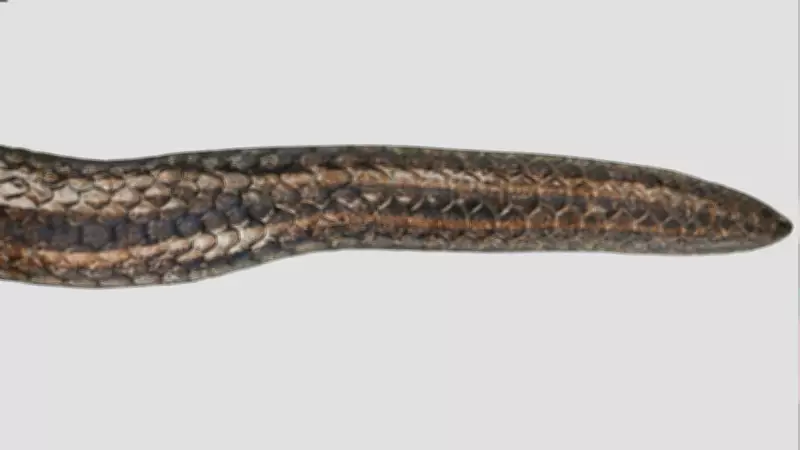
According to a study published in the journal Zoosystematics and Evolution, researchers in southern China have described a novel snake species that locals refer to as the 'two-headed snake.' This name arises because its blunt tail closely resembles its own head in appearance. Officially named Calamaria incredibilis—derived from Latin for 'unbelievable'—the species underscores the surprising genetic uniqueness found so near to its known relatives.
Why Does It Look Two-Headed?
Calamaria incredibilis is a tiny reed snake, measuring only about 8 inches in length. Its tail is unusually short and stubby, mimicking the shape and coloration of its head. This adaptation tricks predators into attacking the less vital tail instead of the head, enhancing survival. Unlike most snakes with long, tapering tails, this species appears almost symmetrical, creating the illusion of two heads.

How Was It Discovered?
Initially, researchers misidentified the snake as Calamaria pavimentata, due to the external similarity among reed snakes. However, detailed examination of scale counts, body proportions, and color patterns revealed discrepancies. Subsequent DNA analysis confirmed it as a distinct species, with genetic divergence exceeding 12% from its closest relatives.
Specimens Found
To date, only two adult male specimens have been collected, both found on roads during daytime surveys. The first was discovered in Ningming County, near the Vietnam border, at an elevation of 3,478 feet. The second was located over 311 miles away in Guilin, within a national nature reserve, at 2,493 feet.
Significance of the Name
The species name incredibilis reflects the researchers' astonishment at finding such a genetically distinct snake living so close to its relatives. It also highlights the hidden diversity within the Calamaria group, suggesting that many more undiscovered species may exist.